Coastal Science Symposium 2026
Hosted by the Department of Natural Sciences | Friday, Dec. 4 | College of Coastal Georgia

The College of Coastal Georgia’s Department of Natural Sciences is proud to present the 11th Annual Coastal Science Symposium – a celebration of student research, hands-on learning, conservation, and education.
This annual event, happening Friday, Dec. 4, brings together students, faculty, community members, and regional collaborators to showcase the vibrant scientific work happening on Georgia’s coast. Attendees will explore student-led poster presentations highlighting research and experiential learning in biology, health, environmental science, data science, and more!
We’re honored to welcome this year’s keynote speaker, Dr. Kathleen Dudzinski, Director of the Dolphin Communication Project. Dr. Dudzinski has studied dolphin behavior and communication for more than 35 years, specializing in how dolphins use tactile, behavioral, and acoustic signals to share information. Her research spans wild and managed dolphin populations around the world, and her work has been featured in documentaries, books, and educational programs. In 2025, Dr. Dudzinski was awarded the Wolfgang Kiessling International Prize for Species Conservation in recognition of her contributions to marine mammal research and conservation.
The Coastal Science Symposium is free and open to the public. No registration is required – just come ready to learn, connect, and celebrate science on the coast!
Please Support the Coastal Science Symposium and Our Students!
This year marks the 11th meeting of the annual Coastal Science Symposium (see past proceedings here)! Since 2016, nearly 500 Coastal Georgia students have presented their experiential learning to the broader community. This important event allows students to communicate and reflect upon their impactful research and service-learning activities, build confidence to present their work at regional and national conferences, and prepare for graduate studies and/or careers in science.
By donating to Coastal Georgia’s Department of Natural Sciences Foundation Account, you can directly support our students’ experiential learning, from funding their research to printing their symposium posters. Sponsors who donate by Friday, November 13, will be recognized at this year’s event. Please reach out to Jamie Bessette at jbessette@ccga.edu to discuss additional opportunities to make a lasting impact on the lives of our students in the Department of Natural Sciences.
What?
Coastal Science Symposium 2026
When?
Friday, Dec. 4, 2025 | 8:30 a.m. – 12 p.m.
Where?
Stembler Theatre and Campus Center Lobby | College of Coastal Georgia | Brunswick
Why?
Join students and the broader community to explore real-world challenges in ecosystem management and conservation, and see how science makes a difference in our coastal community!
We hope to see you there!


Contact Information:
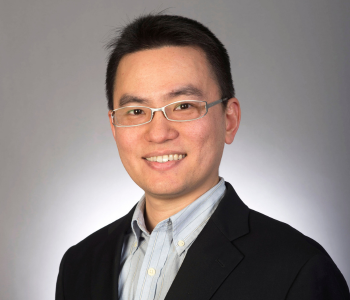
Dr. Min-Cheng Tu
Education
Ph.D. in Water Management and Hydrological Science, Texas A&M University
M.S.L. in Studies Law, University of Pittsburgh
M.S. in Aeronautical and Astronautical Engineering, Purdue University
Teaching and Research Interests / Recent Publications or Scholarly Output
Dr. Tu’s early research focused on stormwater management and computer simulations of surface water processes on the landscape. In recent years, his research and teaching interests switched to spatial science, including GIS (Geographic Information System), satellite remote sensing, and drone remote sensing. He loves science education and is a big fan of Carl Sagan and Neil deGrasse Tyson.
Publications between 2021-2026:
Ssewanyana, A.*, Tu, M.-c. (2026). Performance of Spectral Indices and Machine Learning Algorithms in Seasonal Classification of Urban Impervious Surfaces from Sentinel-2 Imagery: A Case Study of Taipei. Remote Sensing in Earth Systems Sciences. 9(1): 16. doi: 10.1007/s41976-025-00266-9
Chen, W.-j.*, Tu, M.-c. (2025). Automated Process for Analyzing 2D CAD Floor Plan Drawings and Generating FloorspaceJS-Compatible Space Objects for Building Energy Simulations. Building and Environment. 26: 105575. doi: 10.1016/j.rineng.2025.105575
He, L., Geng, X.-w., Huo, H.-y.*, Lian, Y., Xi, Q., Feng, W., Tu, M.-c., Leng, P. (2025). Simulation of Urban Thermal Environment Based on Urban Weather Generator: Narrative Review. Urban Science. 9: 275. doi: doi.org/10.3390/urbansci9070275
Liu, C.-c., Tu, M.-c.*, Lin, J.-y., Huo, H., Chen, W.-j. (2025). Environmental Influence on NbS (Nature-Based Solution) Mitigation of Diurnal Surface Urban Heat Islands (SUHI). Remote Sensing. 17: 1802. doi: 10.3390/rs17101802
Huo, H.*, Wang, Z., Zhou, L., Liu, Z., Tu, M.-c. (2025). Wind Field Simulation and Its Impacts on Athletes’ Performance, Based on the Computational Fluid Dynamics Method: A Case Study of the National Sliding Centre of the Beijing 2022 Winter Olympics. Applied Sciences. 15: 3685. doi: 10.3390/app15073685
Tu, M.-c.*, Chen, W.-j. (2023). “Field Measurement of Dynamic Interaction Between Urban Surface and Microclimate in Humid Subtropical Climate with Multiple Sensors.” Sensors. 23(24): 9835. doi: 10.3390/s23249835
Tu, M.-c.*, Huang, Y.-c. (2023). “Impacts of Land Reclamation on Coastal Water in a Semi-Enclosed Bay.” Remote Sensing. 15(2): 510. doi: 10.3390/rs15020510
Wang, C.-p.*, Shih, B.-j., Tu, M.-c. (2021). Study on the improvement of disaster resistance against tsunamis at Taiwan’s Keelung Port. Natural Hazards. 110: 1507-1526. doi: 10.1007/s11069-021-05000-4
Nichols, W.*, Welker, A., Traver, R., Tu, M.-c. (2021). Modeling seasonal performance of operational urban rain garden using HYDRUS-1D. J. Sustainable Water Built Environ. 7(3): 04021005. doi: 10.1061/JSWBAY.0000941