
Students Showcase Brunswick’s Past with Downtown Exhibit Proposals
The next generation of historians stepped into a new role—not as students, but as curators of local history.
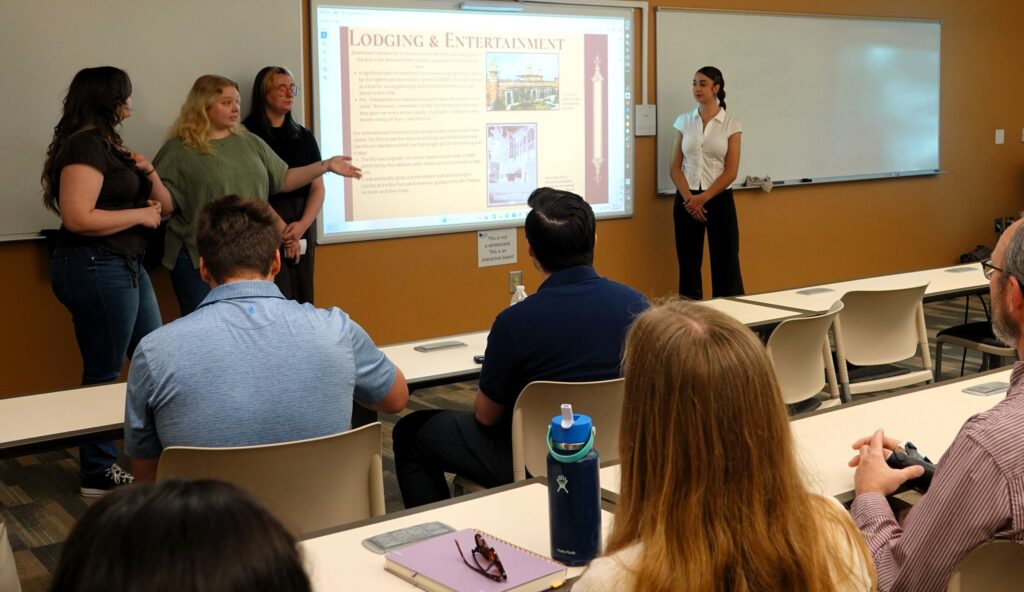
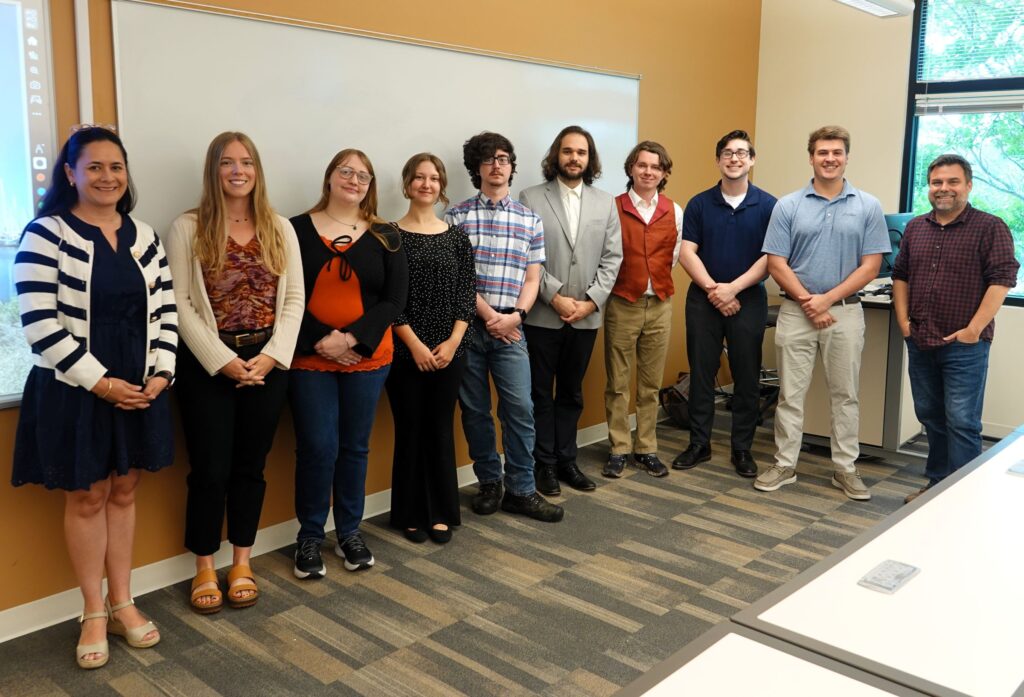
Students in HIST 3325 Introduction to Public History, taught by Assistant Professor of History Dr. Hector Montford, unveiled proposals to reimagine how Downtown Brunswick’s past could be experienced today. They presented exhibit ideas to representatives of the Downtown Development Authority (DDA), which would be displayed inside Old City Hall.
Executive Director Mathew Hill, Main Street Manager Lina Bareno, and Development Associate Cassidy Taylor visited campus to review proposals that ranged from interactive displays to photo timelines, and historical objects.
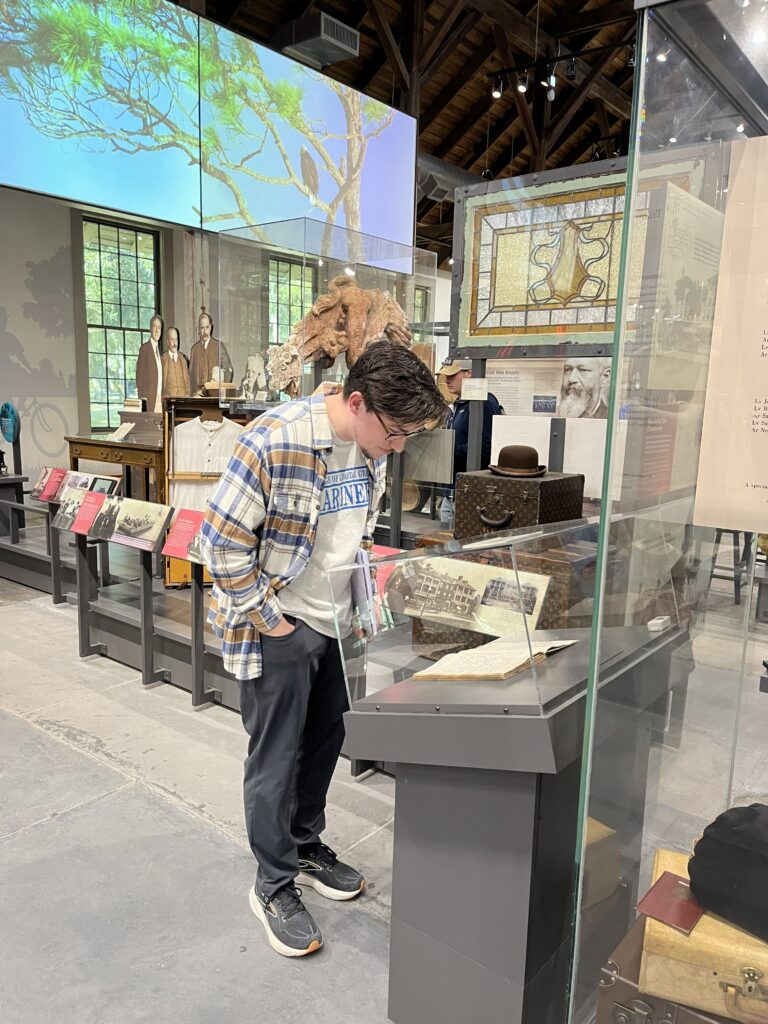
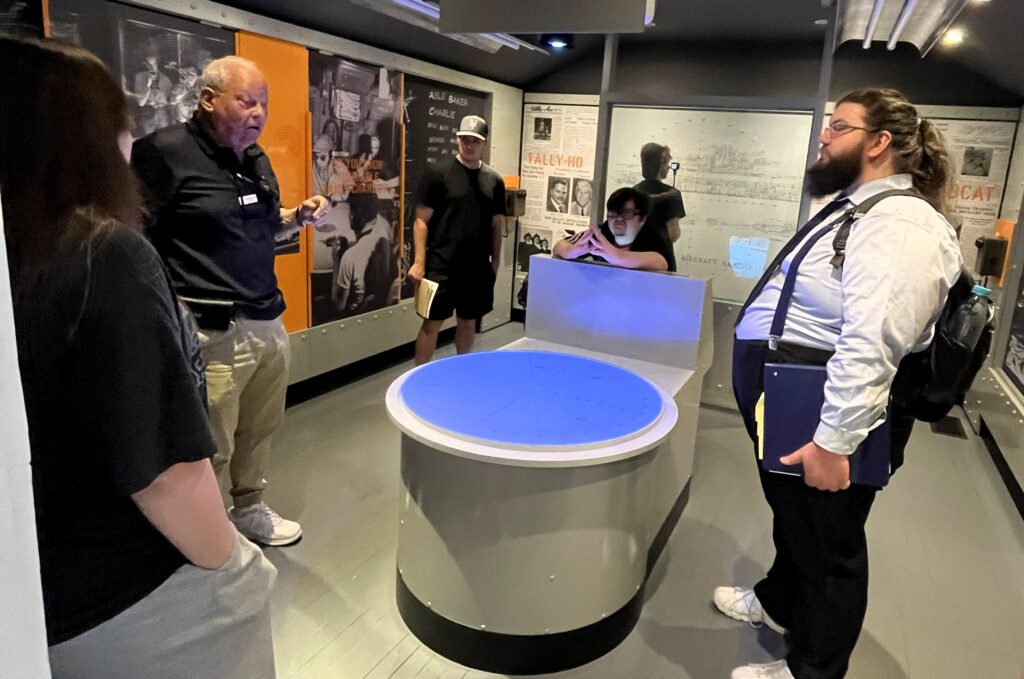
Earlier in the semester, students visited the Jekyll Island Mosaic Museum and the World War II Homefront Museum, and wrote essays comparing the museum exhibits. Those exhibits and their experience at the museums were used as inspiration for their proposals.
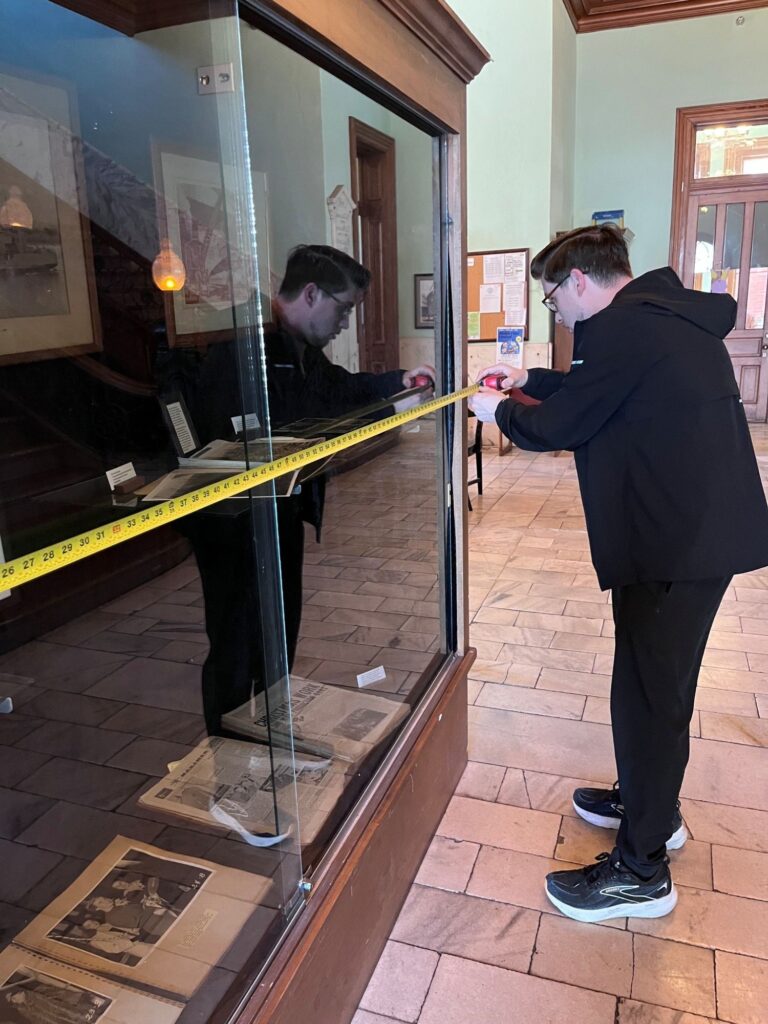
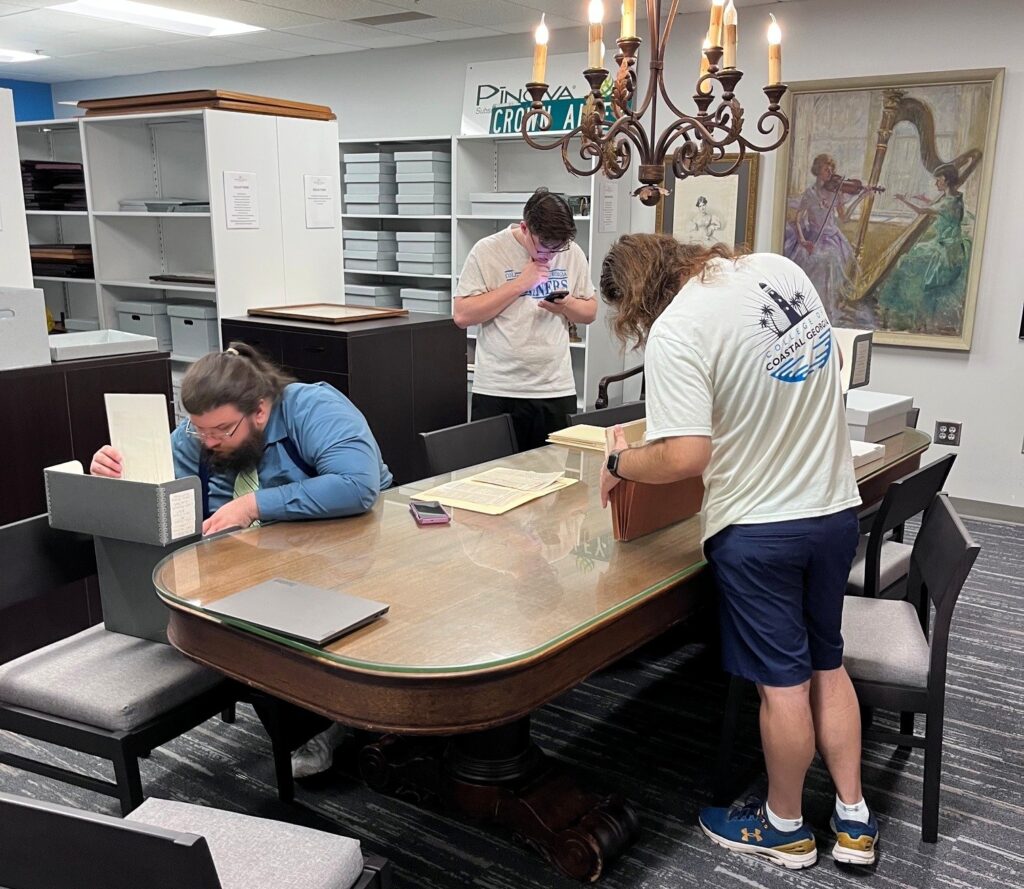
Students were divided into four groups, each were given a budget of $1,000, and a map of Old City Hall. Some students also visited Old City Hall to take measurements of the walls, exhibit cases, and to learn what materials were already on display that could be useful to their exhibits. Then Montford and his students spent time in the Heritage Room Archives of the Brunswick Public Library to conduct historical research on their exhibit topics.
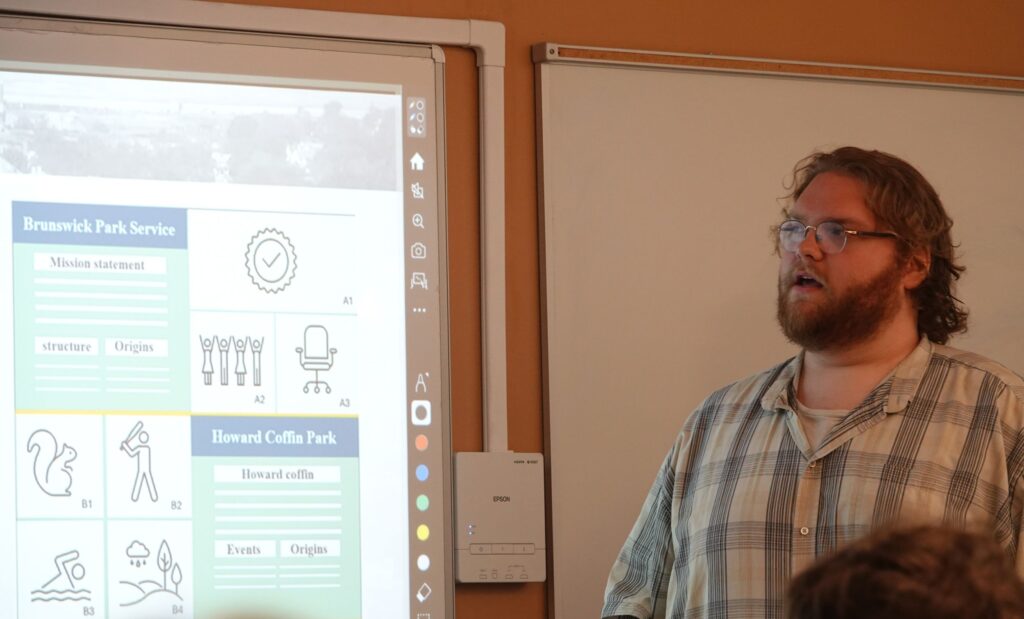
The exhibits focused on four different aspects of Downtown Brunswick’s history: business, municipal services, communities, and transportation and infrastructure. The first group focused on highlighting businesses located on Newcastle Street throughout the years, such as Cunningham Jewelers. The second group focused on municipal services, designing an exhibit incorporating the city flag’s colors — blue, green and white. Their proposal featured a timeline of the library and hospital; emergency services, with a focus on the police and fire department; parks and recreation services; and sanitation, highlighting the city’s efforts for a healthy, clean Brunswick.
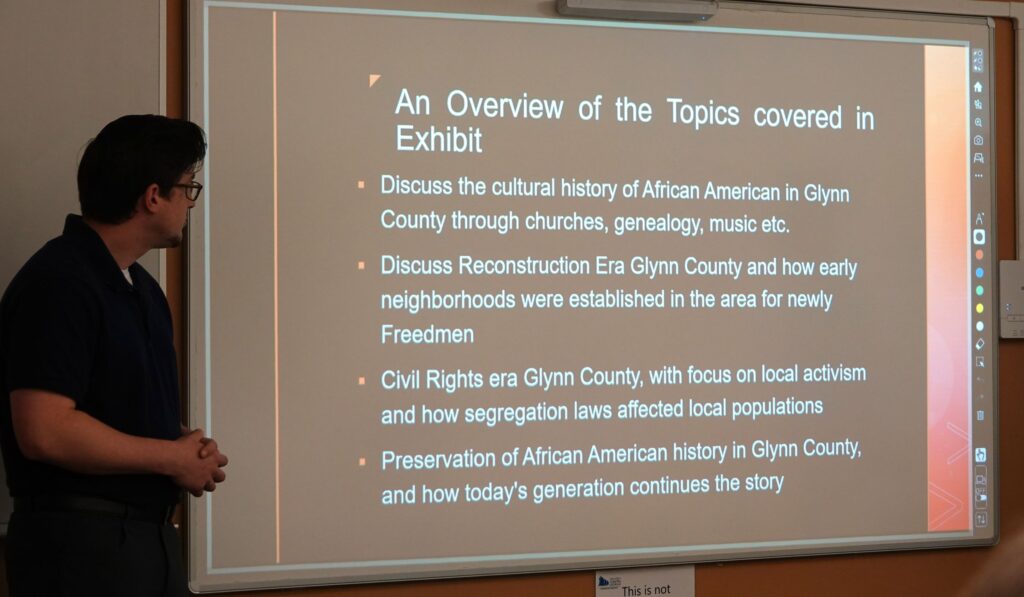
The third group focused on community history, emphasizing the impact of African American culture in the area, such as the Dixville Historic District and local activism. Students stressed the importance of preserving these stories and discussed rotating exhibits to highlight other communities, including Portuguese and Jewish residents.
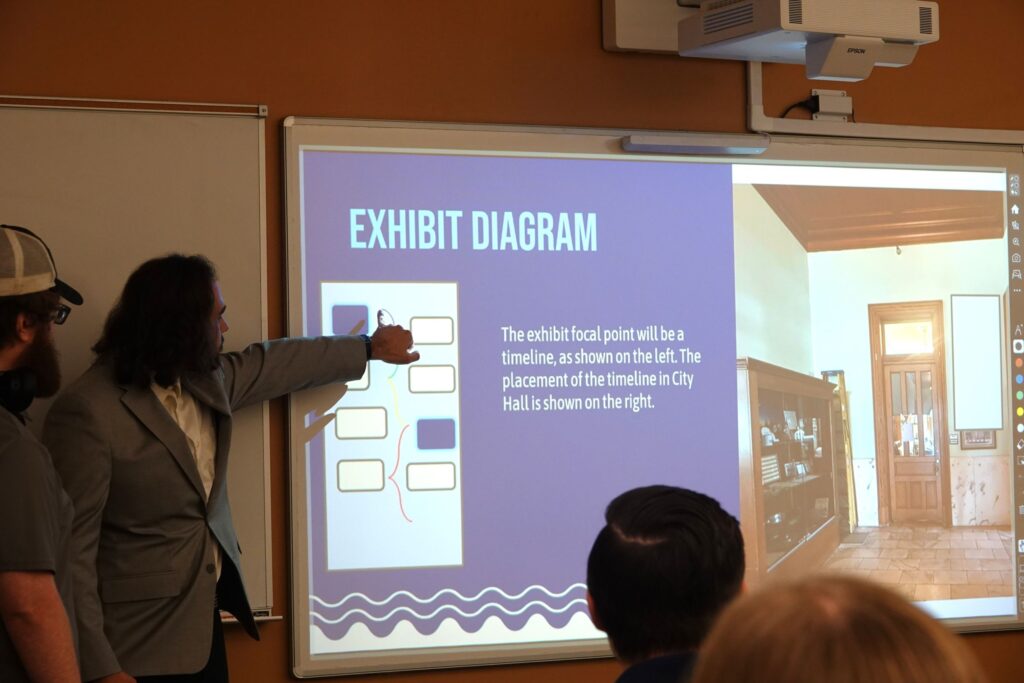
The fourth group explored transportation and infrastructure, highlighting modes of travel that brought people to Brunswick, including the original Interstate 95 route plan, the historic trolley system, the Brunswick Steamship Co., and the B Line railroad. A section of their exhibit would feature future transportation plans for the region. Students proposed using an existing display case to house historical artifacts such as street signs, model trains, boats, and license plates. They also suggested installing a trolley bell for visitors to ring.
Bareno commended students for their research and creativity, praising one group’s use of space, color, and storytelling to make information easy to understand.
Montford was impressed with his students’ presentations.
“They did a great job explaining the key topics they intended to address in their respective sections of the exhibit and provided excellent visual overviews of the design and layout of their sections,” Montford said. “We will use their exhibit proposals as templates to actually construct the exhibits this summer in our AMST 4300 Supervised Research class.”
During the summer, students will learn best practices in exhibit design and layout. After the DDA selects which exhibits to develop, students will build and install them in Old City Hall. Montford said he hopes the exhibits will be completed by the end of summer, with an opening planned for the fall.
For students, the project offered more than an academic exercise. It reflects the value of collaboration between the classroom and the community, demonstrating that local history should not only be studied but also shaped, interpreted, and shared with the people who call Brunswick home.