
Elevated Learning Through Honors
The Honors Program at the College of Coastal Georgia offers motivated students an enriched academic experience that extends well beyond the classroom. Designed for intellectually curious learners, the program emphasizes critical thinking, leadership, undergraduate research, and civic engagement. Honors students approach their coursework from an advanced perspective, engaging more deeply with material and exploring connections across academic disciplines.
To graduate from the Honors Program, students must earn a minimum of 12 honors credits by taking designated honors-level courses and/or working with a faculty member through an Honors contract, which could include a capstone project. Students Alex Salgado, Asia Stokes, and Noah English will join an elite group of students who’ve successfully completed the Honors Program.
Asia Stokes
Asia Stokes will be earning a bachelor’s degree in American studies with a concentration in communication, literature, and media. Stokes is originally from Jacksonville, Florida, but now resides in St. Marys, Georgia.
Stokes aspires to have a career in library and archival sciences. She previously worked in childcare for several years and developed an interest in public service, particularly outreach, which she said was her favorite part of the job.
“One of my responsibilities was to create the curriculum for the children, but I also wanted to incentivize our families to foster learning at home,” Stokes said. “My favorite classroom program was to allow parents to borrow a book from the classroom for the weekend so their kids could get more exposure to our classroom library. We served a lot of low-income and/or foster families, so this program was well received, especially by the parents who weren’t able to consistently get new books in the home.”
Although Stokes loved her job, she felt something was missing from her career. She envisioned a profession where she could help people while also engaging with one of her favorite subjects: history.
“It wasn’t until after I left my teaching position to focus on coursework that I came across library and archival sciences,” she said. “It felt like my entire trajectory changed.”
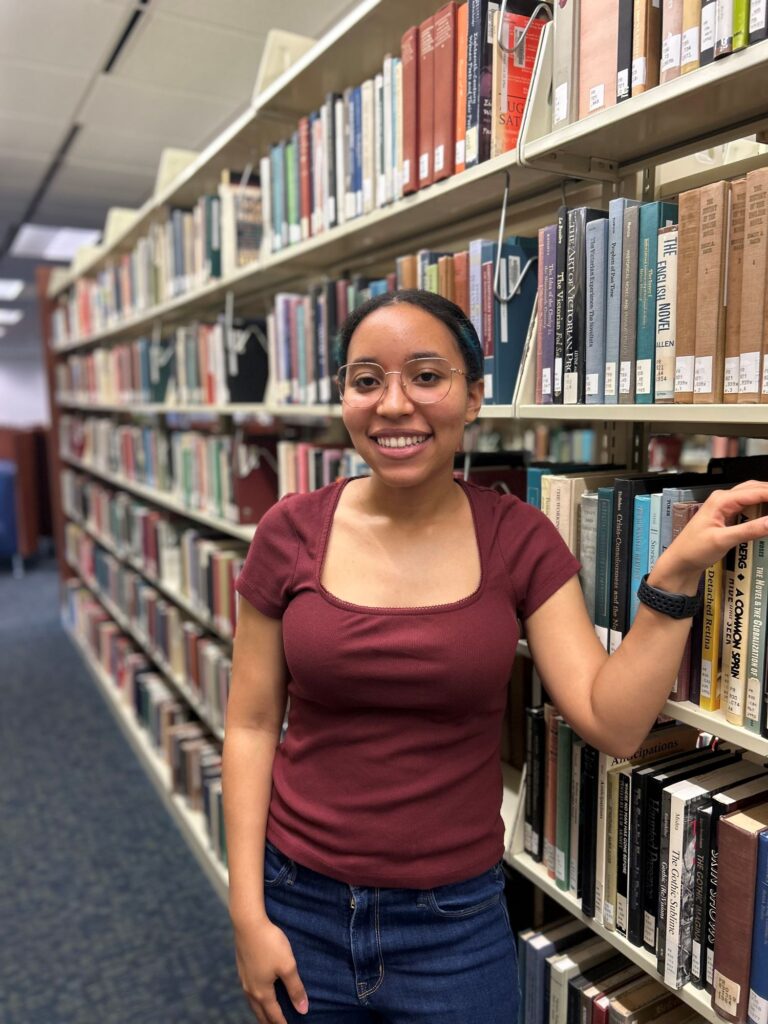
Stokes has worked as a student assistant at the Mary Gould Memorial Library since July 2025. She described the experience as “incredible” and said the librarians’ passion for their work inspired her to pursue a similar path. Stokes plans to earn a master’s degree in library and information science with a concentration in special collections or archival studies. She is currently interviewing for two archival internships to gain experience before beginning graduate school.
Stokes first learned about the Honors Program through Emily Boyle, director of the Honors Program and senior lecturer of English, when she enrolled as a dual-enrollment student at the Camden Center. After class one day, Boyle spoke with Stokes about her contributions to discussions and her ability to engage in what Boyle calls “upper-division thinking.” Stokes soon recognized the program’s appeal, particularly its networking and independent research opportunities.
Stokes earned honors credit in English Literature and Composition and American Literature with Boyle; Advanced American Identities with Dr. Lainie Pomerleau, assistant professor of English; and through an honors capstone project in American Studies with Dr. Andrea Kwasny, associate professor of English.
Her honors project for American Literature, titled “Dissecting Three Texts’ Sociopolitical Themes Surrounding Restrictions on Reproductive Rights,” analyzed three popular sources within the context of Georgia’s health education system and examined the consequences of restricted access to sex education.
Last semester, Stokes completed a project titled “Data Privacy and Digital Manipulation in ‘Modern’ Elections,” in which she traced the evolution of political campaigns and focused on the 2016 Cambridge Analytica scandal. She discussed how the scandal exposed the dangers of unregulated data collection.
Stokes’ honors capstone project centered on detecting and measuring artificial intelligence-generated content and disinformation during an election cycle. Titled “Manufactured Doubt: AI-Curated Misinformation and 2024 Voters,” the project was presented at the American Studies Student Showcase and the American Studies Capstone Presentation.
“AI-generated content is ephemeral, yet engaging with it shapes what and how people think. The throughline to all of my work has been addressing where there are lapses in education and knowledge in topics that affect everyone,” Stoke said. “Information and knowledge should be accessible and readily available to anyone, not just those that can afford to go through newspaper paywalls.”
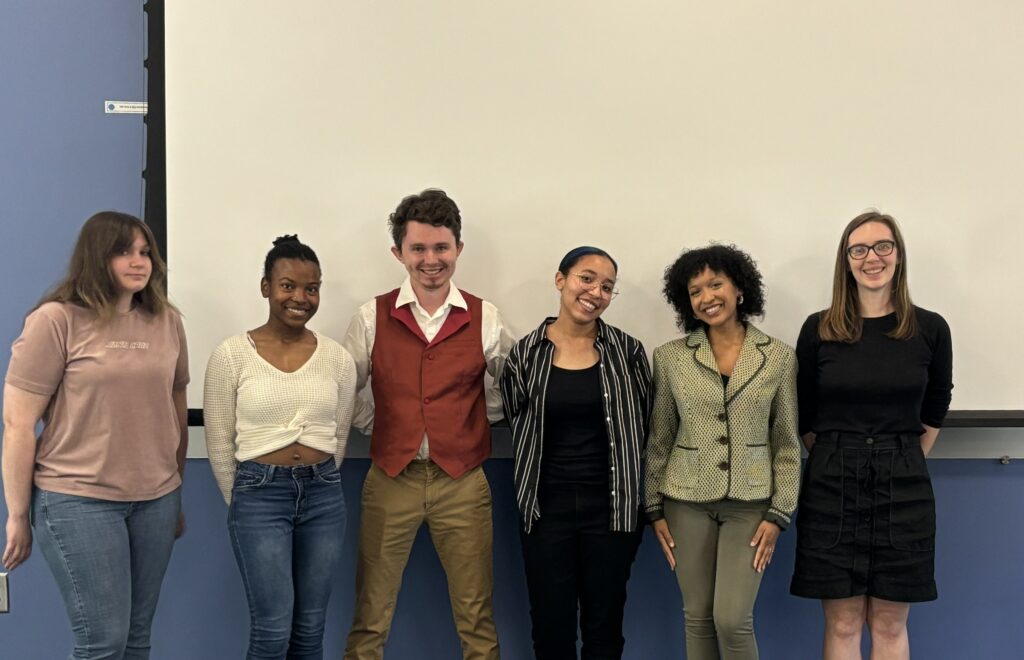
Kwasny described Stokes as having an uncanny ability to identify emerging trends in American culture and transform them into material for critical analysis.
“Sometimes this presents a challenge in terms of available scholarship,” Kwasny said. “However, Asia finds ways to work around this by thinking creatively and using nontraditional sources.”
Stokes’ project also included a section offering tips to help students identify AI-generated content.
“In order to complete this project, she has tracked own relevant misinformation that has been intentionally removed from platforms like social media posts, precisely because it was false,” Kwasny said. “In this regard, Asia’s work illustrates her independence of mind and commitment to studying complex contemporaneous practices.”
During her time in the Honors Program, Stokes said she learned the importance of perseverance. From struggling with her ePortfolio to facing multiple internship rejections, there were moments when she considered quitting. However, the sense of accomplishment she felt at the end of each semester kept her motivated. Knowing she was working toward a goal that would ultimately support her career outweighed moments of disappointment, she said.
Her advice to students considering the Honors Program is not to underestimate the value of networking within their chosen fields.
“The idea of networking is pushed on college students, but no one actually tells you how to do it or why,” she said. “It can be daunting to ask professors for opportunities or recommendations, but this program gave me the opportunity to work with professors in a capacity that a lot of students don’t get to.”
Stokes said asking to collaborate on an honors project is an effective way to build professional relationships.
“Now, different faulty know my name and can attest to my work ethic and abilities,” she said. “This is indispensable for me, as someone that wants to go to graduate school and is applying for jobs that require multiple academic references.”
Her experience in the Honors Program helped her build professional connections in a supportive and encouraging environment.
Noah English
Noah English graduated in December 2025 with a bachelor’s in biological sciences with a concentration in integrative biology. English earned honors credit in the following courses: American Literature with Boyle; U.S. History Since 1865 with Dr. Hector Montford, associate professor of history; and Genetics with Dr. Holly Nance, associate professor of biology and Dr. David Stasek, professor of biology.
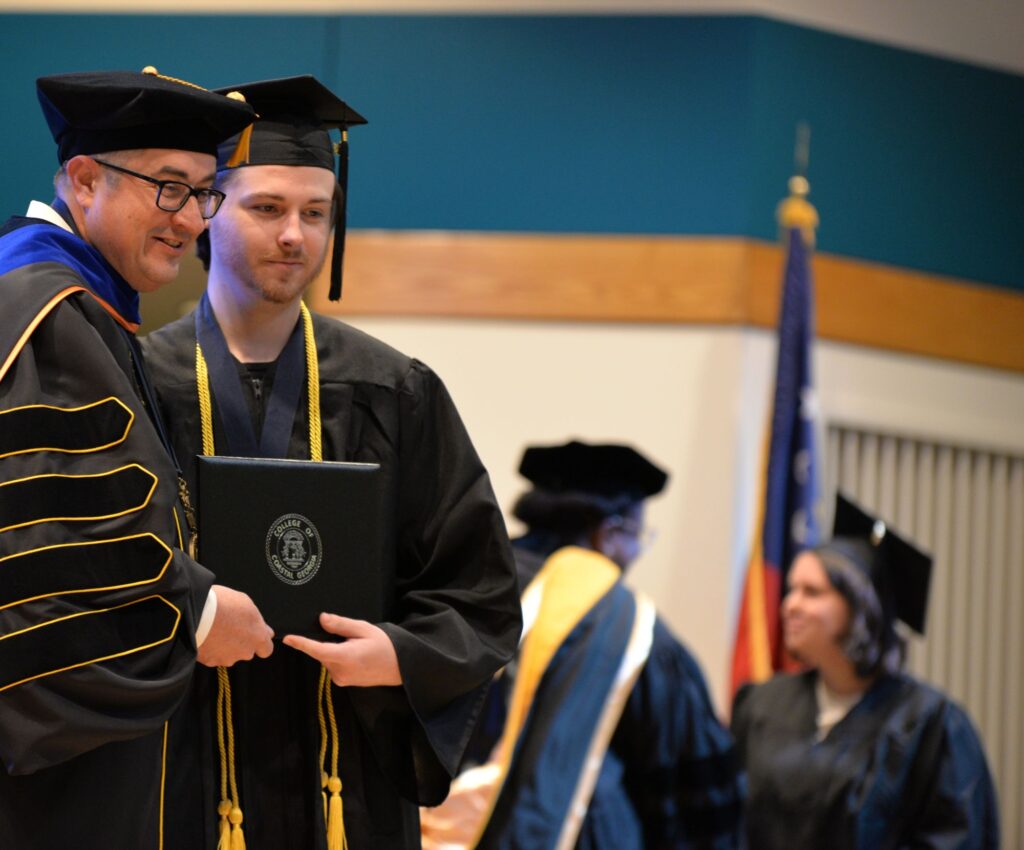
English is from Frankfort, Kentucky, and is pursuing a career at the intersection of microbiology, genetics and, bioinformatics.
“My goal is to do hands-on lab work while also using computational tools to analyze biological data and solve real research problems,” he said.
English participated in the Honors Program for the opportunity to work on cutting-edge science with faculty members while challenging himself academically. The program helped him grow as a researcher and become a part of what he described as a “more rigorous, collaborative environment.”
For his honors project with Nance, English used bioinformatic tools to complete genetic annotations of different species of fruit flies. English’s senior seminar course with Stasek continued his work with the Science Education Alliance-Phage Hunters Advancing Genomics and Evolutionary Science program, commonly known as SEA-PHAGES. The SEA-PHAGES program is a two-semester, discovery-based undergraduate research course focused on genomics and biomedical research. In the program, students discover novel bacteriophages—viruses that infect bacteria—which have the potential to save lives.
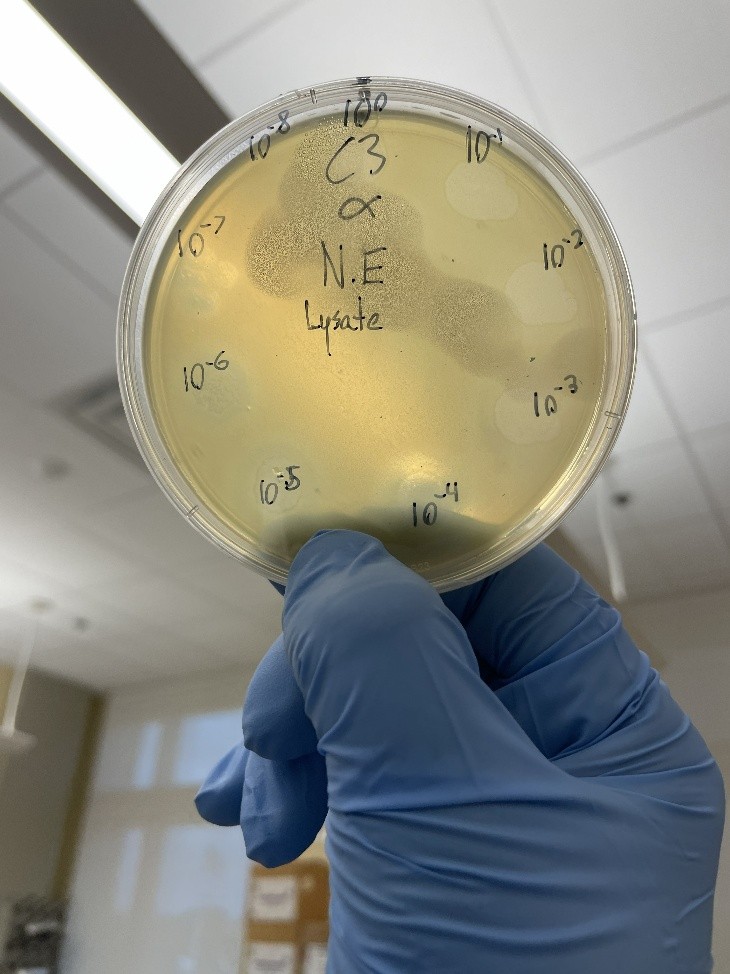
Bacteriophages occur naturally and is often found in soil samples. English collected samples from Jekyll Island and discovered a phage in 2023, naming it LilTerminator. In Going Viral II, English helped students annotate LilTerminator’s genome to analyze its DNA sequence.
“The SEA-PHAGES program was offered at CCGA, and it immediately matched my interests in microbiology and genetics,” English said. “It gave me a chance to study bacteriophages through both lab work and bioinformatics, which directly fit my goals.”
English has presented is his work at the College’s ENDEAVOR Conference and co-authored an article in the open-access online journal, microPublicationBiology.
Reflecting on his time in the program, English said he learned that when brilliant minds come together, there are no tasks too tall.
“Working with classmates and faculty showed me how much more can be accomplished through collaboration, persistence, and shared problem-solving,” he said.
English encourages students to challenge themselves and participate in the Honors Program, saying it pushes students toward becoming the best versions of themselves.
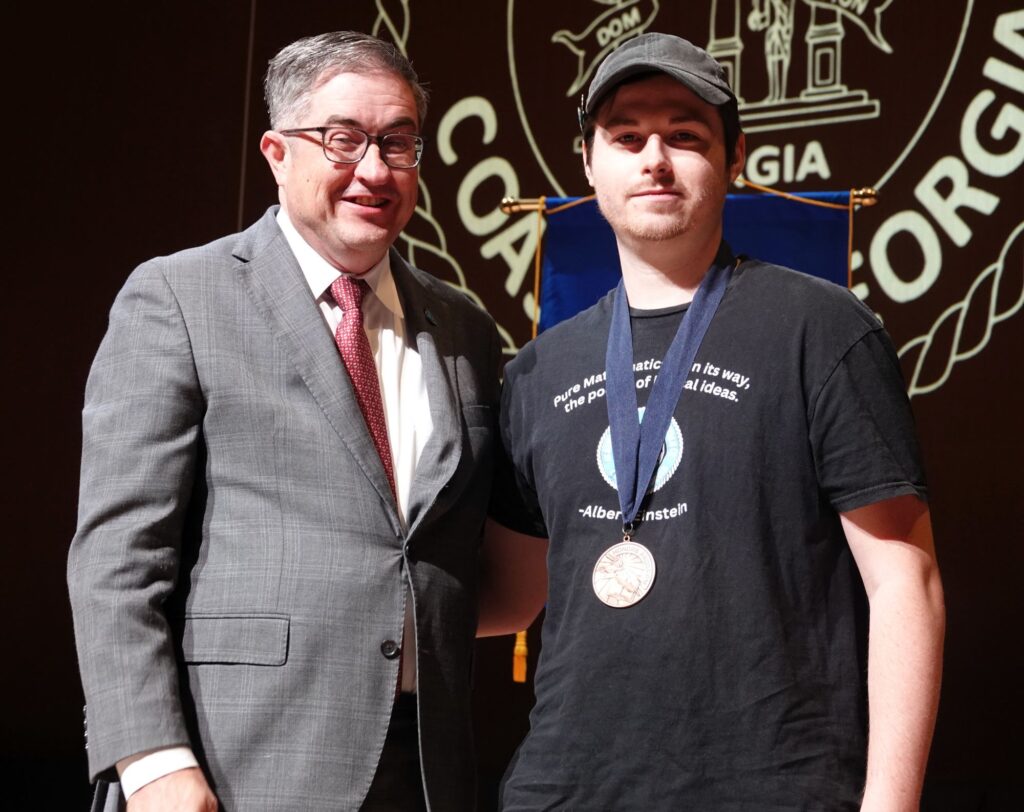
“I am incredibly thankful for the opportunities the Honors Program gave me, especially the chance to do meaningful research and grow academically,” English said. “I honestly would not know where I would be without it.”
Since graduation, English has been acquiring a Google certificate in IT Automation with Python while exploring graduate school opportunities.
Alex Salgado
Alex Salgado will be earning a bachelor’s in biological sciences with a concentration in biochemistry. He earned honors credit in the following courses: Psychology with Dr. Brian Pope, professor of psychology; Advanced Microbiology with Dr. Jennifer Hatchel, professor of biology; Evolution with Joshua Clark, senior lecturer of biology; and Pathophysiology with Dr. Dantera Tangpisuthipongsa, associate professor of biology.
A native of Brunswick, Salgado will attend the Medical College of Georgia in the fall to pursue his goal of becoming a physician.
“I am currently interested in family medicine, emergency medicine, or aerospace medicine. No matter which specialty I ultimately choose, my aspiration is the same: to be a pillar for my community, to build meaningful and lasting relationships, and to positively transform the lives of others,” Salgado said. “I hope to be an empathetic, humble physician who listens deeply and communicates with patients in a way that truly impacts their health and well-being in a positive manner.”
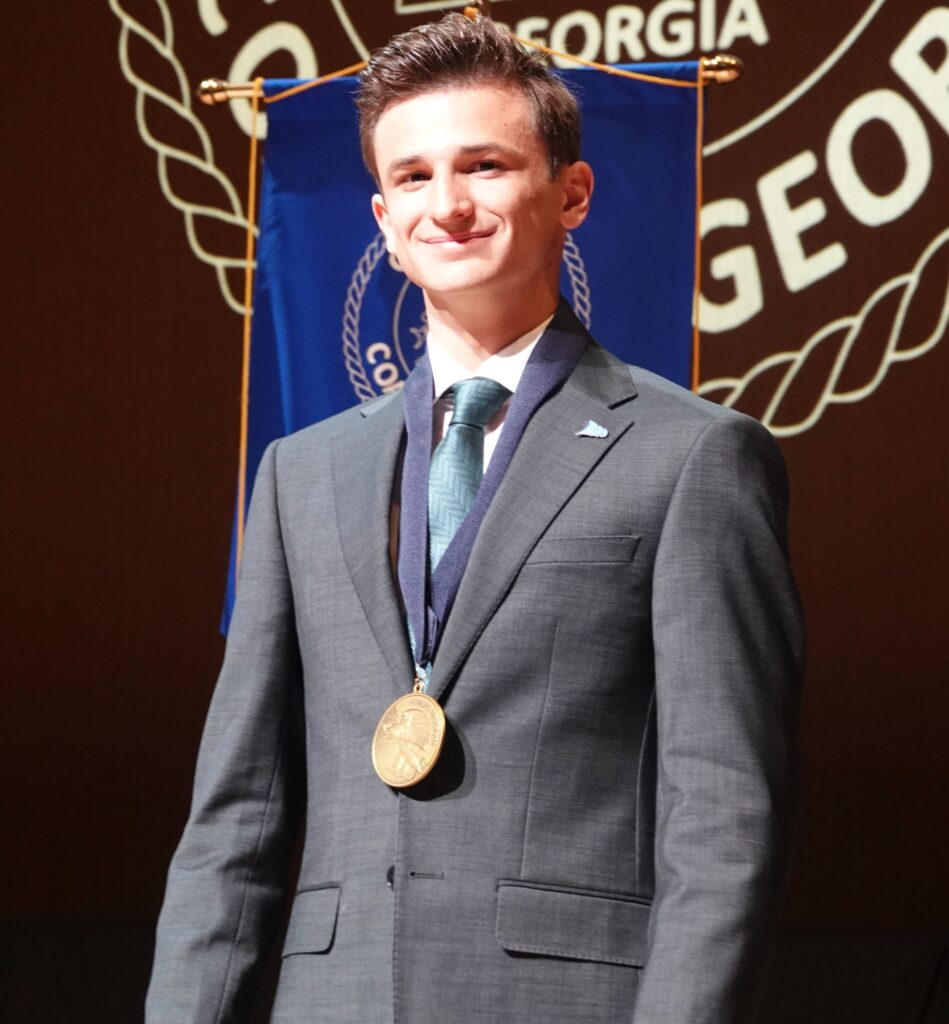
Salgado joined the Honors Program to enrich his academic experience by exceeding standard classroom expectations, he said. To become a stronger scientist and future practitioner, he wanted to learn how to question concepts more deeply and understand the reasoning behind what he studies.
“The Honors Program offered the challenge, mentorship, and academic freedom necessary to grow in that way,” he said.
Salgado selected his honors research topics based on their relevance to his future career. One project involved investigating the antimicrobial properties of common household spices, which helped deepen his understanding of microorganisms. For his pathophysiology course, Salgado simulated molecular changes in the protein characteristics of glargine, the active ingredient in the diabetes medication Lantus. Tangpisuthipongsa said Salgado took a simple concept — improving glargine — and made it his own.
“He took ownership of the project and periodically checked in for guidance on data interpretation,” Tangpisuthipongsa said. “He dove deep into research, testing different combinations until he found a unique one that could potentially improve the drug.”
Salgado also taught himself how to use computational tools to compare molecular structures, ensuring his analysis was objective and scientifically sound.
Tangpisuthipongsa said Salgado’s findings could open the door for further research into new variants of glargine that are equally effective, more stable, or better absorbed, offering additional treatment options for diabetes management.
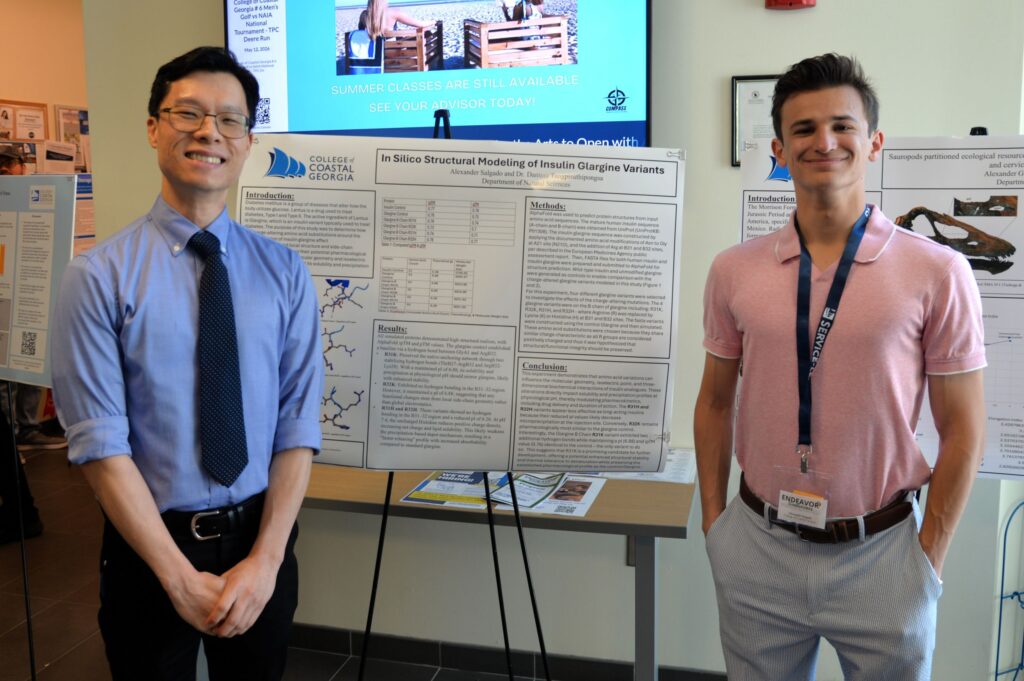
“He put a lot of time and effort into the project while balancing a heavy schedule,” Tangpisuthipongsa said. “Alex’s work could potentially improve the quality of life for many patients with diabetes.”
Salgado also completed an honors project examining the feeding habits of sauropods — long-necked herbivores — during the Jurassic period in North America. Sauropods are the dinosaur clade that produced the largest land animals in Earth’s history.
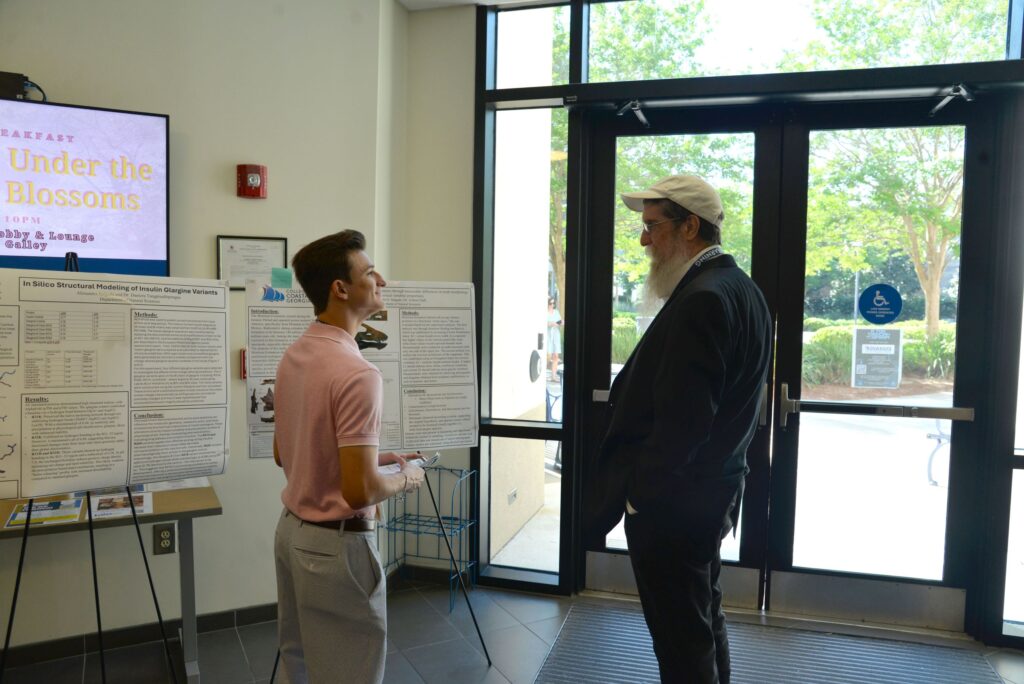
Clark described Salgado as a standout student who elected to explore geology in greater depth.
“He has been overwhelmed with other work at times, but he has always shown great interest and passion for this project,” Clark said. “Despite all of his other commitments and outside challenges, he has put in a lot of time in this project and conducted some great research.”
Through the Honors Program, Salgado said he learned that hard work and curiosity can take a person an extraordinary distance.
“When you’re willing to put yourself out there, stay malleable, and remain adaptable, you can learn an incredible amount and truly transform into a better version of yourself,” he said. “The Honors Program has taught me how to think critically, communicate effectively, and approach challenges with resilience.”
Salgado encourages other students to remember they do not have to be perfect to succeed in the program — only willing to challenge themselves.
“I highly encourage students to participate because the experiences I’ve gained have been invaluable to my academic journey. The program pushes you, supports you, and helps you get more out of your education. It will challenge you and ultimately help you grow into a stronger version of your yourself,” he said.
Salgado said his experience in the Honors Program profoundly shaped his life. He expressed gratitude for the faculty and staff who invested in his success and provided him with countless opportunities. Their support has made all the difference, he said, and he will carry that gratitude forward.
“Throughout my journey, I have been met with nothing but compassion and an unwavering belief in my potential,” Salgado said. “Exceptional faculty—especially my advisor Dr. Dan (Tangpisuthipongsa)—have stood by me during some of my most challenging moments. Their guidance and advocacy have shaped not only my academic path but also the person I am becoming. Coastal has prepared me in ways I never imagined possible—academically, professionally, and personally.”
Salgado has presented his research at the Coastal Science Symposium and the ENDEAVOR Conference. He was inducted into the College’s Student Hall of Fame, served as president of the Pre-Med & Pre-Vet Club, Astronomy Club, and worked as a campus tour guide for the Office of Admissions. Salgado was also selected to represent the institution at the University System of Georgia’s Academic Recognition Day. At the Spring 2026 Commencement, Salgado will deliver the invocation.
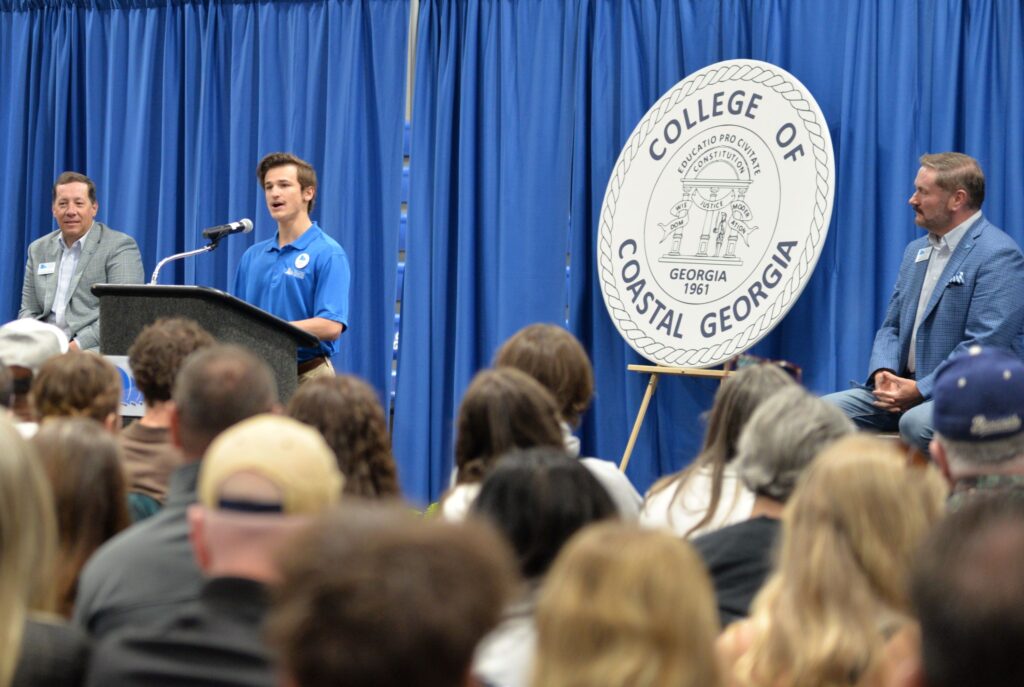
Working to Together
Boyle is optimistic about the future of the Honors Program as it continues to grow and attract faculty and students interested in “leveling up learning” and taking advantage of expanded opportunities. Successfully completing the program requires teamwork between faculty and students, which is happening throughout the program. For example, Librarian and Assistant Professor Michele Johnson shared her archival expertise with Stokes during her capstone project. Honors student Tai Valenzuela, a junior majoring in environmental science, is working across disciplines with Tyler Bagwell, professor of communication, to study the use of documentary film in environmental research. For English’s phage research, Stasek provided independent instruction on gene-editing technology.
“Faculty are willing to teach Honors Program resources used beyond traditional classes to help students with their Honors projects,” Boyle said.
The Honors Program supports a well-rounded college experience that integrates academic excellence with research, leadership, teamwork, service and personal growth. Students are encouraged to become leaders both on campus and in their communities. Honors projects allow students to apply theory to real-world questions while building skills in research methods, data analysis, and professional presentation. By promoting interdisciplinary learning and applied scholarship, the program prepares students to think critically and succeed beyond Coastal Georgia.
To learn more about the Honors Program, visit https://www.ccga.edu/academics/honors.