Marine Science

The marine science concentration as part of the B.S. in Environmental Science provides students with a broad understanding of marine ecosystems and how they are interrelated. This course of study is meant to prepare you for graduate school in any marine field, a career in environmental monitoring, and work as a research technician for marine-based consulting firms or regulatory agencies. Through internships, independent study, and coursework, the marine science concentration provides numerous opportunities for students to apply classroom learning to the field. Here, students are able to think critically about various marine ecosystems (from the poles to the tropics), and how they function.
Why study marine science at Coastal Georgia?
The College of Coastal Georgia is uniquely situated less than 10 miles from two of Georgia’s barrier islands: Jekyll Island and St. Simons Island. The extensive salt marshes, tidal inlets, and estuaries allow for endless opportunities to ask questions about the influence of tidal flow on marsh biology, chemistry, and geology. Our working relationships with the Department of Natural Resources and University of Georgia Marine Extension have further provided opportunities for students to learn about fisheries and marine ecosystem management. What better way to learn about marine science than by doing marine science on the coast? Coastal’s courses aim to provide students with hands-on, field-based experiences that allow them to explore everything from ecosystem processes to coastal formation and community dynamics. The field is right outside our doors, so we aim to take advantage of it as much as we can!
What will I learn?
As part of the marine science concentration, students will take courses in marine biology, oceanography, and aquatic biology and ecology to dive into a greater understanding of the marine system. The program of study concludes with a broad understanding of how marine ecosystems such as salt marshes, estuaries, the open ocean, coral reefs, kelp forests, and mangrove forests function individually and as an ocean system. Students will further understand how all systems are interrelated on a biological, physical, chemical, and geological level.
At every stage of study, we aim to get students out in the field – whether observing how ocean-going vessels work, or witnessing how sharks are researched. Classmates work together to conduct course-based research that prepares them with the necessary skills to do field and basic laboratory research.
What can I do when I graduate?
Graduates are prepared for graduate school in any marine field, or a career in environmental monitoring, with the qualifications necessary to work as a research technician for marine-based consulting firms or regulatory agencies.
Learn more about what you can do with a career in marine science.


Contact Information:
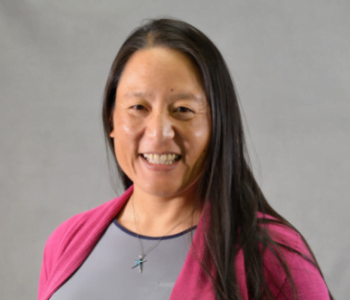
Dr. Kimberly Takagi
Education
Ph.D. Marine and Environmental Science, University of the Ryukyus, Okinawa, Japan
M.Sc. Chemistry, Biology, and Marine Science, University of the Ryukyus, Okinawa, Japan
M.A. Teaching, University of Piedmont, Demorest, GA
B.Sc. Integrative Biology, Chapman University, Orange, CA
Teaching and Research Interests / Recent Publications or Scholarly Output
My teaching is focused on High Impact Practices that allow students to become the drivers of their own learning. I use experiential learning, service-learning, and writing intensive approaches to allow my students to not just learn, but “do” science and think scientifically. My research interests are centered around marine ecology, marine coastal biogeochemistry, and aquatic ecology. I have recently presented work on the use of Course-based Undergraduate Research Experiences (CUREs) in the instruction and training of Scientific Divers.

Dr. Kimberly Takagi awarded ‘Professor of the Year.’
Dr. Takagi is known as a professor who deeply cares for her students, but also challenges them.
“She is one of the most caring teachers I’ve ever had,” one student said. “She believes in me, takes extra time to help me understand my mistakes, and encourages me to keep going.”
Floating on the Other Side of the World
Right now, on the other side of the world is an aquatic, robotic float adopted by the College of Coastal Georgia, that is taking measurements of its environment to contribute to the understanding of one of the planet’s most important ecosystems. The float, named “Mud Skipper,” is currently underneath the surface of the Southern Ocean off the tip of Australia.