Coastal Ecology

Are you fascinated by sharks or sea turtles? Do you want to learn more about oysters, cordgrass, and countless other species that interact to form coastal ecosystems? Are you inspired to help manage natural resources and conserve biodiversity for future generations? The Coastal Ecology concentration of the B.S. in Biological Sciences degree allows you to study, and to do, coastal ecology, marine biology, and conservation biology on the Georgia coast!
Why study Coastal Ecology at Coastal Georgia?
Given the College’s location in the Golden Isles, students enjoy easy access to diverse coastal ecosystems: beaches and dunes, salt marshes, estuaries, maritime forests, etc. Field sites such as Cannon’s Point Preserve and Jekyll Island serve as living laboratories for hands-on discovery and conservation. Our community partners – the Department of Natural Resources, Georgia Sea Turtle Center, and many others – support internships and service-learning projects that give students practical experience. Students can also conduct undergraduate research with faculty mentors and collaborators, leading to conference presentations and even publications. The annual Coastal Science Symposium provides a forum for students to share their work and explore coastal and marine science research and applications to society.
What will I learn?
Building on a strong foundation in Biology – the study of life in all its forms – the Coastal Ecology curriculum includes courses such as Marine Biology, Aquatic Ecology, Conversation Biology, Zoology, Botany, and electives in other areas of biodiversity, ecology, and evolution. You will learn how to think and work as biologists by designing experiments, collecting and analyzing data in the lab and field, and communicating your results. You will also have opportunities to apply and extend your knowledge and skills through service-learning, internships, and biological research – these forms of experiential learning are critical for your scientific and professional development (i.e., they will help you get a job or funding for graduate school)!


What can I do when I graduate?
A degree in Biological Sciences – Coastal Ecology prepares students for graduate studies and careers in marine biology, ecology, conservation, wildlife and natural resource management, environmental education, etc. Recent graduates have been employed by the Georgia Department of Natural Resources, Jekyll Island Conservation, Florida Fish and Wildlife Conservation Commission, UGA Marine Extension, U.S. Fish and Wildlife Service, Georgia Aquarium, Tennessee Aquarium, and a number of other public agencies and companies. Alumni have also pursued Master’s and Ph.D. degrees in biology, ecology, marine sciences, and related disciplines at leading research universities, where they have received teaching and/or research assistantships that pay their way through graduate school.

“I have been well prepared for graduate school. The Biological Sciences program and mentorship at Coastal are top notch.”
-Nicole DeSha, Class of 2017, B.S. in Biological Sciences – Coastal Ecology
Now a Biological Scientist for the Florida Fish and Wildlife Conservation Commission, Nicole earned her M.S. in Biology from Georgia Southern University. While at Coastal, her undergraduate research studied the effects of a prescribed burn on the adult butterfly assemblage of a coastal grassland.
Photo: Nicole DeSha finds a rat snake at Cannon’s Point Preserve, St. Simons Island

Cameron Atkinson, Class of 2020
Cameron double majored in Biological Sciences (concentration in Coastal Ecology) and Environmental Science. While at Coastal, he conducted undergraduate research on living shorelines and oyster restoration, interned with the Georgia Department of Natural Resources, and received the prestigious Nathan Deal Conserve Georgia’s Natural Resources Scholarship. He has since completed a M.S. in Marine Sciences at Savannah State University, and is now an ecological restoration project manager.
In the above photo, Cameron is surveying oysters and other benthic invertebrates before a living shoreline is installed at Honey Creek.
Coastal Ecology students heading into the swamp…
Students scoping a gopher tortoise with the Georgia Department of Natural Resources
-
Dr. C. Tate Holbrook
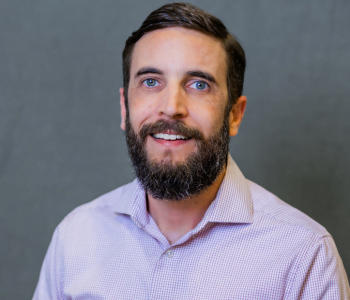 Chair, Department of Natural Sciences,
Professor of BiologyEducation
Ph.D. in Biology, Arizona State University
B.S. in Biology, University of North Carolina at AshevilleTeaching and Research Interests / Recent Publications or Scholarly Output
Dr. Holbrook leads the Department of Natural Sciences, teaches courses in biology (e.g., Principles of Biology, Conservation Biology, Animal Behavior, Invertebrate Natural History), and conducts research in ecology, evolution, and conservation with students and collaborators.Selected Publications:
Forrest, T.G., J.A. Hamel, and C.T. Holbrook. 2025. Calling songs and duets of two new species in the Amblycorypha rotundifolia complex (Tettigoniidae, Phaneropterinae). Journal of Orthoptera Research 34(2):233-248. https://doi.org/10.3897/jor.34.145640
Holbrook, C.T., C. Atkinson, J. Fountain, S. Knox, and J. Mackinnon. 2024. Ecological and educational impacts of a living shoreline on St. Simons Island, Georgia, USA. Georgia Journal of Science 82(2). https://digitalcommons.gaacademy.org/gjs/vol82/iss2/3/
Holbrook, C.T., P.M. Barden, and J.H. Fewell. 2011. Division of labor increases with colony size in the harvester ant Pogonomyrmex californicus. Behavioral Ecology 22(5):90-96. https://doi.org/10.1093/beheco/arr075
Petranka, J.W., E.M. Harp, C.T. Holbrook, and J.A. Hamel. 2007. Long-term persistence of amphibian populations in a restored wetland complex. Biological Conservation 138:271-380. https://doi.org/10.1016/j.biocon.2007.05.002