
Football Rivalry and Colonial Conflict: Exploring Georgia and Florida’s Shared History
With the annual Georgia-Florida football game bringing teams from Athens and Gainesville together next weekend, Dr. Paul Vasquez discussed another set of historical contests during the Social Science Speaker Series sponsored by the Department of Social Sciences.
On Monday, Oct. 20, Vasquez, assistant professor of political science, presented “Spanish Settlement and Revolt: Georgia, Florida & Colonial ‘Games,’ 1526-1898.” The “games” Vasquez examined were the sometimes-deadly struggles that occurred for international control of southeastern North America, with a focus on what is now Georgia and Florida. The presentation was the second lecture of the semester in the series.
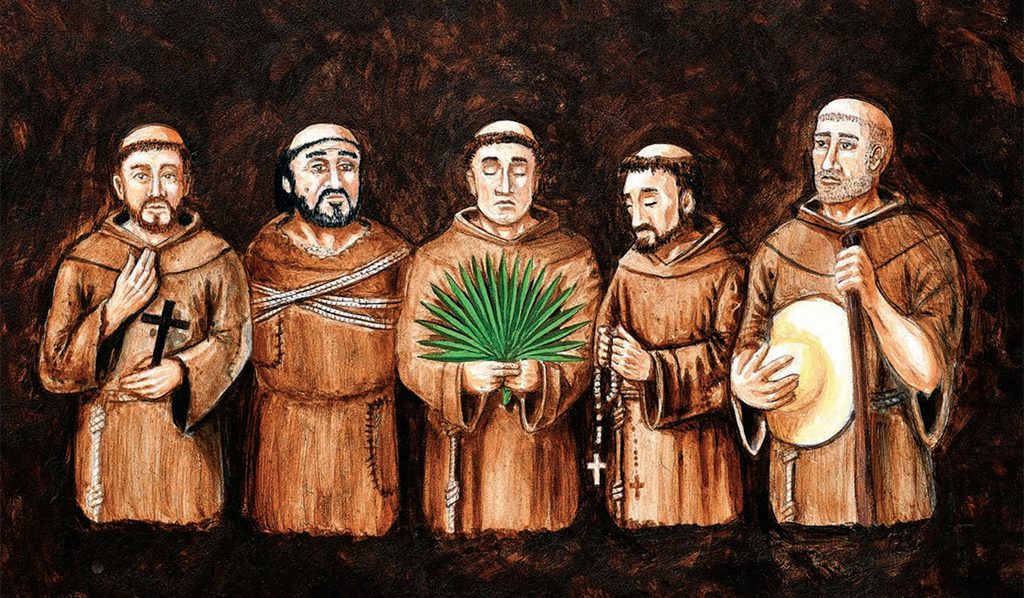
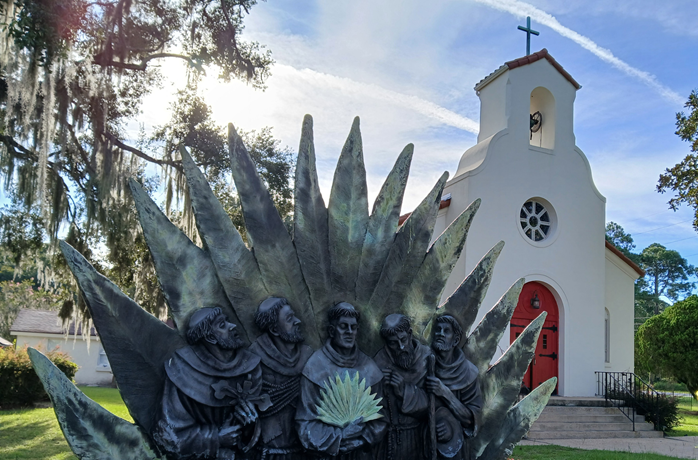
Vasquez discussed a variety of violent confrontations that took place along the Georgia and Florida coasts. The earliest uprisings occurred in the 16th century, when Indigenous people in Georgia revolted against Catholic missionaries working to advance Spanish interests in the region. The conflicts included the deaths of five Franciscan friars, commonly known as the Georgia Martyrs, who were killed in present-day McIntosh County. The Roman Catholic Diocese of Savannah is scheduled to honor them later this month during a beatification ceremony.
Vasquez also examined how Spanish Florida became an early destination for enslaved people seeking freedom from Georgia and the Carolinas during the 18th and 19th centuries. Their movement south contributed to regional armed conflicts involving Spanish Florida, first with the British colonies and later with the United States during the First Seminole War.
Finally, Vasquez discussed two covert smuggling operations in the 19th century that violated U.S. law by transporting people and weapons to support efforts to overthrow Spanish rule in Cuba decades after Florida became part of the United States. The first operation took place in 1851 and the second in 1896. Both involved covert movement through McIntosh, Glynn, and Camden counties. The latter mission supplied men and weapons that helped set the stage for the Cuban-Spanish-American War in 1898, which liberated Cuba from Spanish rule.
By tracing centuries of conflict, migration, and political struggle across Georgia and Florida, Vasquez illustrated how the histories of the neighboring states have long been intertwined. His presentation highlighted the region’s role in shaping major events in North America and the Southeast long before today’s Georgia-Florida rivalry.
Article submitted by Assistant Professor of Political Science Dr. Paul Vasquez