
Inaugural Okefenokee Science Symposium Showcases Research, Conservation, and Collaboration
More than 100 attendees, including researchers, undergraduate and graduate students, faculty, staff, conservation professionals, and community members, gathered at the Center for the Arts for the inaugural Biennial Okefenokee Science Symposium on Oct. 16. Discussions and presentations covered a wide range of topics, not only related to the Okefenokee Swamp, but also conservation efforts in Georgia, history, culture, and wildlife.
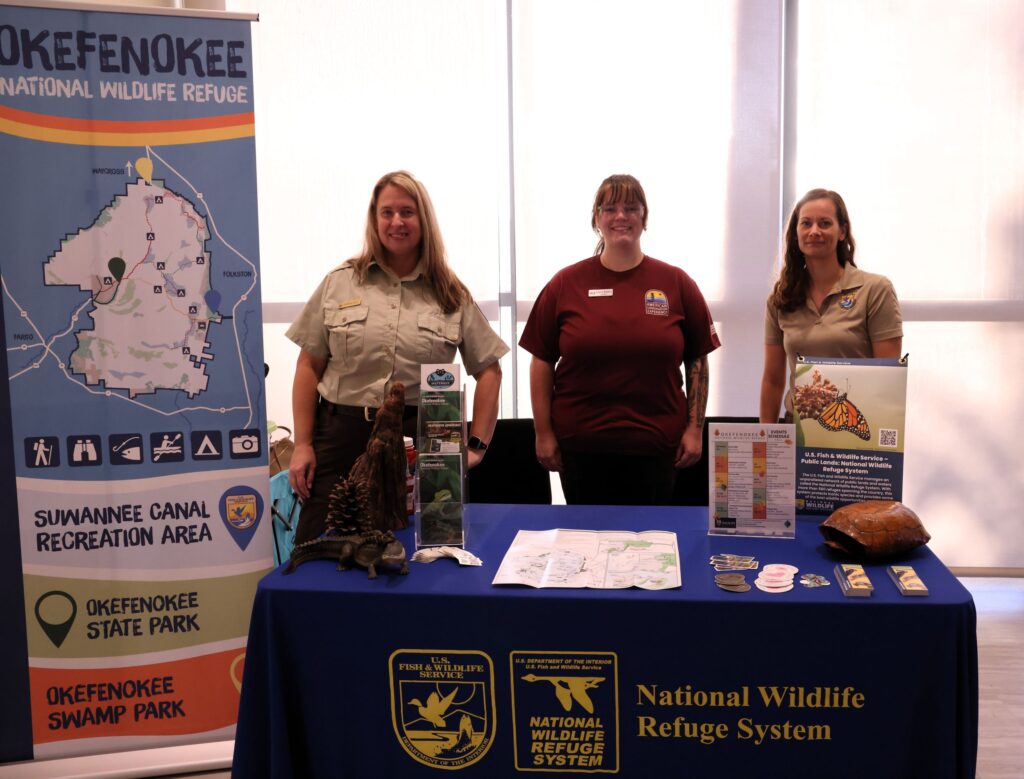
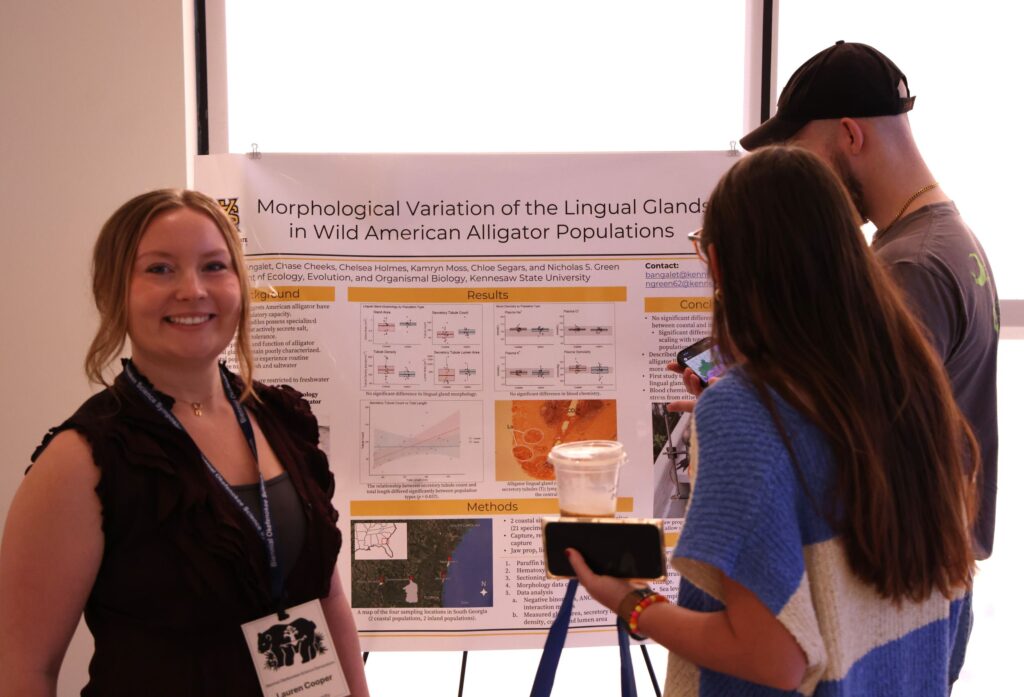
Research poster presentations by students, graduate students, and organizations lined the lobby and auditorium. Among the presenters was College of Coastal Georgia senior Olivia Fambrough, who conducts research in the College’s Microfossils Research Lab. The lab focuses on the discovery and identification of microscopic fossils from Clarks Quarry in Brunswick.
Fambrough’s project, “Using Fish Microfossils to Determine the Paleoecology of Clary Quarry During the Late Pleistocene,” sought to identify fish microfossils from the quarry to better understand the paleoclimate and paleoecology of the Late Pleistocene Epoch. By examining scales and other microfossils from saltwater and freshwater fish species, she was able to draw conclusions about the environment that existed thousands of years ago. Fambrough presented at the symposium to highlight the innovative research taking place at the lab.
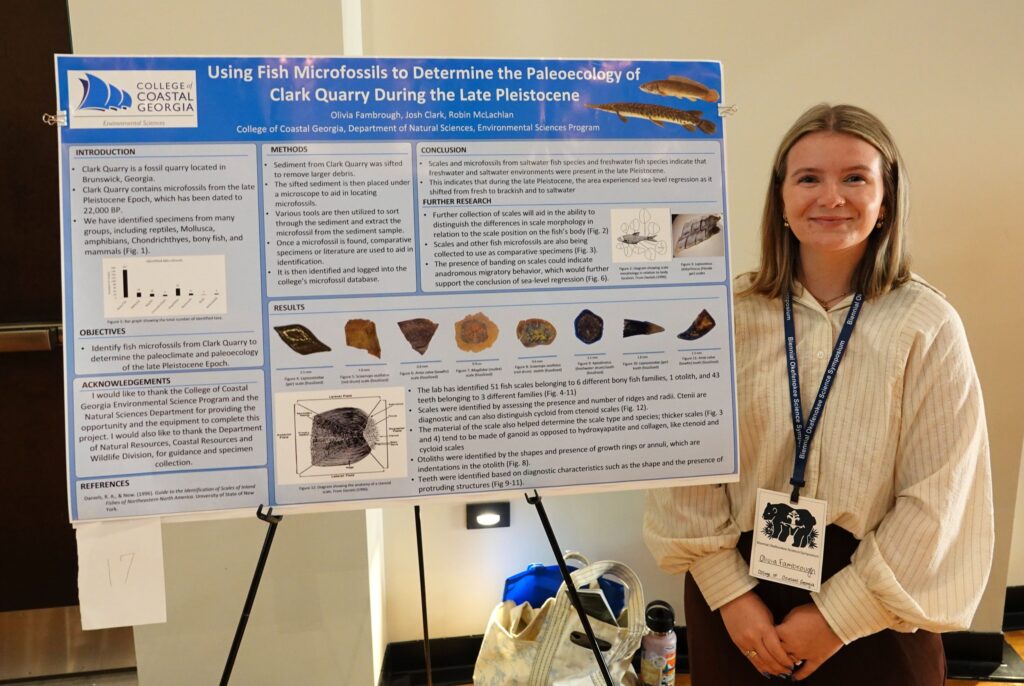
“The Microfossils Research Lab is doing some really cool things on campus, and I wanted to highlight that,” Fambrough said. “We may be a small school, but we’re doing some awesome things, and I wanted to share that with others.”
College alumni also returned to present their graduate research and professional work. Carlie Blackburn, a 2023 graduate and graduate research assistant at Auburn University, presented her research poster, “Ecosystem Water Use Efficiency of Geographically Isolated Wetlands.” Her project investigated water-use efficiency at two relatively undisturbed wetlands at The Jones Center at Ichauway in Newton, Georgia. Alum Logan Zimmerman ’26 attended on behalf of his employer, the Central Florida Zoo & Botanical Gardens.
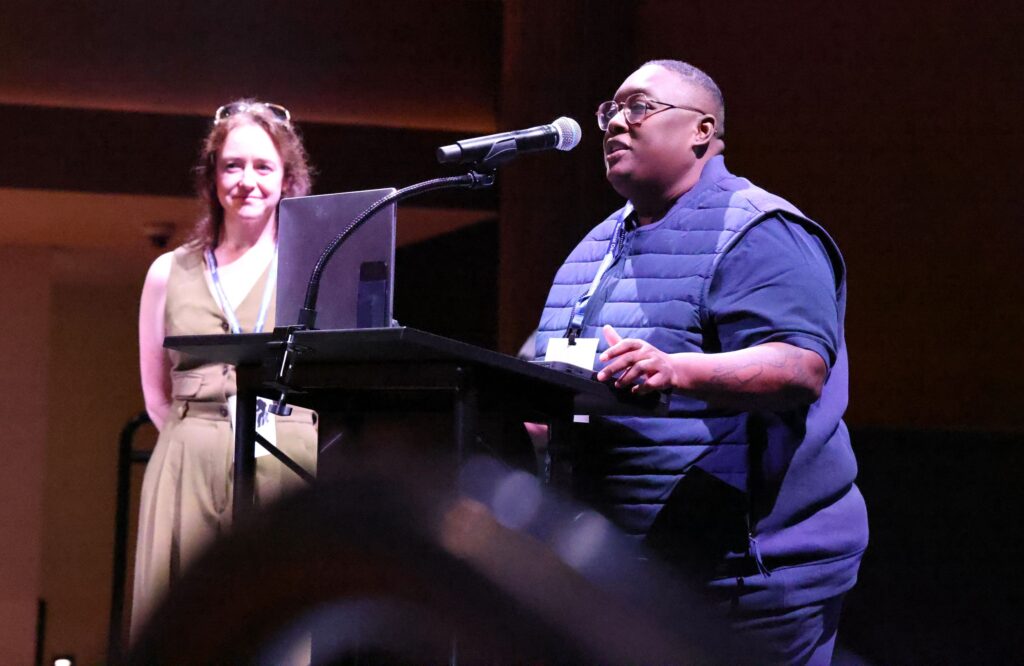
Not all research highlighted at the symposium focused on the natural sciences. Project Archivist Jessica Neal and Project Manager Jennifer Berglund presented their archival research on the Okefenokee National Wildlife Refuge’s Civilian Conservation Corps (CCC) Company 1433, an all-Black CCC unit that helped open much of the Okefenokee region to tourism and commerce during the 1930s and 1940s. Company 1433 built roads, firebreaks, and park infrastructure that shaped much of the landscape visitors know today. Neal and Berglund discussed how they pieced together some of the experiences of Company 1433 through archival research, the interdisciplinary nature of their work, and the importance of preserving this history.
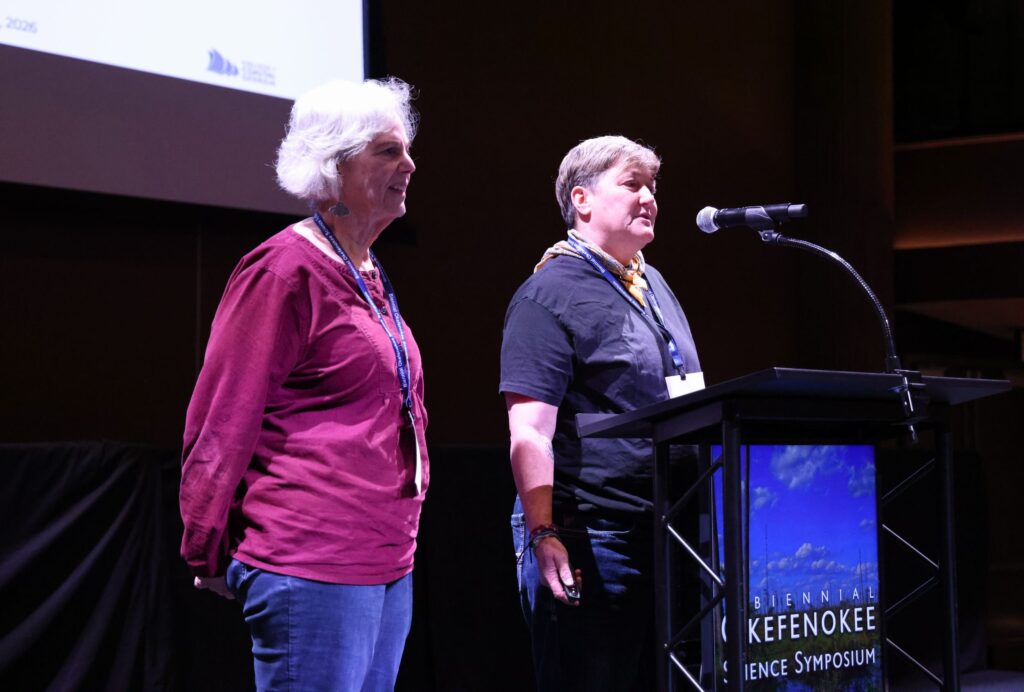
Assistant Professors of Architecture at Kennesaw State University, Keif Schleifer and Dr. Marietta Monaghan, presented “Translating BF-1: An Architectural Investigation of a CCC Camp in the Okefenokee National Wildlife Refuge.” Their research focused on mapping the buildings and structures of the CCC camp to better understand how the site was used. Drawing from historical records, they shared renderings that reimagined structures once standing at the camp.
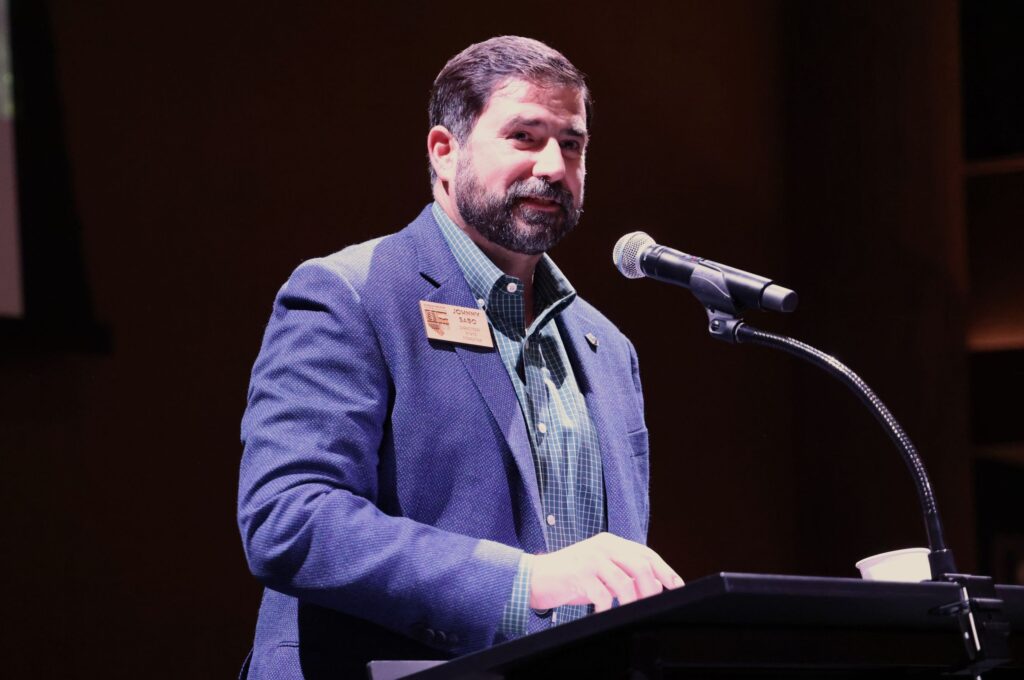
The symposium also featured three keynote speakers, including Georgia State Forester and Georgia Forestry Commission Director Johnny Sabo. Sabo discussed the close relationship between forestry and conservation. Because more than 80 percent of Georgia’s forestland is privately owned, he explained that successful conservation efforts often depend on working closely with landowners and understanding how landscapes change over time. He also emphasized the critical role prescribed fire plays in maintaining healthy ecosystems.
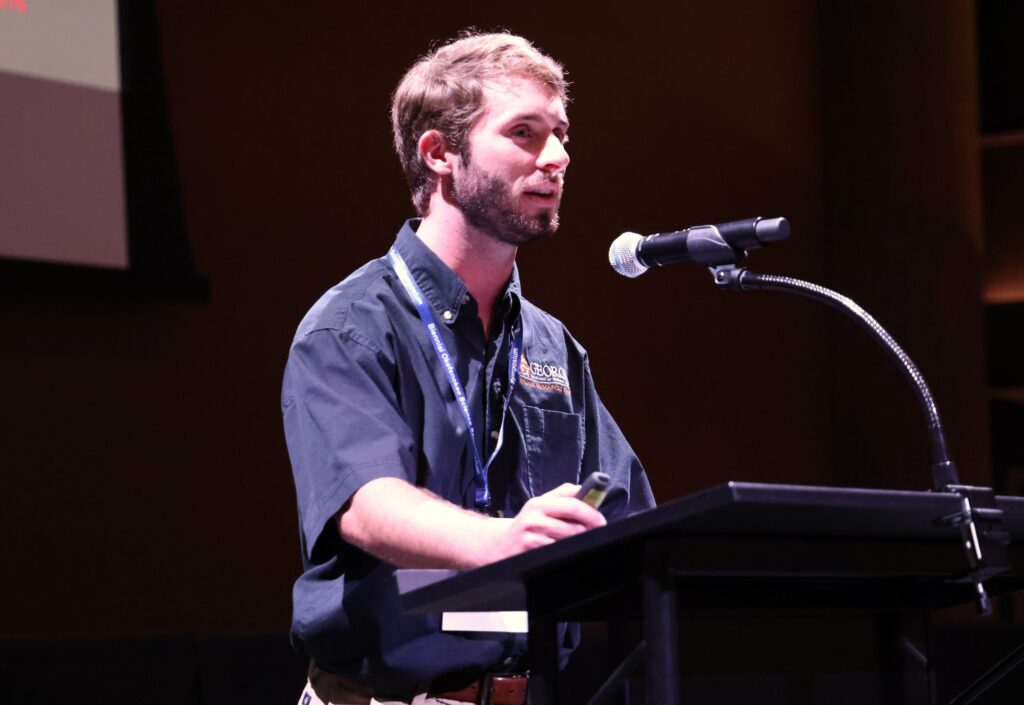
Benjamin Carr, a bear biologist assistant with the Georgia Department of Natural Resources, spoke about south Georgia’s black bear population. Carr shared how bears are tracked, monitored, and studied, offering attendees insight into ongoing wildlife management efforts across the region.
Throughout the symposium, presentations and discussions explored a broad range of additional topics, including the use of environmental DNA to monitor bird populations, carbon dioxide and methane emissions, groundwater studies, alligator ecology, hydrology, insects, and Georgia’s water future.
The inaugural Biennial Okefenokee Science Symposium celebrated and inspired students, and fostered meaningful connections across disciplines that will advance the understanding and conservation of the Okefenokee. The symposium demonstrated the power of bringing together scientists, students, historians, conservation professionals, and community members to share knowledge and ideas. By highlighting both established and emerging research, the event inspired future collaboration in conservation, stewardship, and scholarship.
The Okefenokee Science Symposium was hosted through a collaboration between the College of Coastal Georgia Environmental Science program, University of Georgia Marine Extension and Georgia Sea Grant, and the U.S. Fish and Wildlife Service.