Criminal Justice

You have a strong moral compass and a desire to make a positive difference. We have the degree for you. The Criminal Justice degree at Coastal Georgia is focused on you and your desire to be a part of the solution to real-world challenges.
The field of criminal justice offers opportunities to contribute in multiple areas, including law enforcement, investigations, the courts, corrections, and cyber defense. Coastal Georgia’s criminal justice degree is focused on the knowledge that each of these areas and many others are important to the education of today’s criminal justice students. We are preparing our students to be tomorrow’s capable and prepared law enforcement professionals, and leaders who will contribute to public service and help shape public policy in municipalities and states, as well as domestically and internationally, for many years to come.
Our graduates have been employed by federal departments and agencies, including Naval Criminal Investigative Service, Federal Bureau of Investigation, Customs and Border Protection, Transportation Security Administration, Federal Law Enforcement Training Centers, Immigration and Customs Enforcement, United States Secret Service, and others, as well as numerous state and local departments, including Georgia State Patrol, Glynn County Police Department, Cobb County Police Department, Brunswick Police Department, and others. Other students have successfully entered graduate level programs or law school.
In addition to the strength and relevance of our criminal justice courses, our students benefit from our close partnership with the nearly Federal Law Enforcement Training Centers (FLETC). Our criminal justice courses are taught by some of the finest law enforcement instructors in the nation. Additionally, our criminal justice degree provides students with key management and leadership competencies and critical thinking skills, further enhancing our program’s focus on preparing our students for their futures.
The field of criminal justice is vast and includes positions such as police officer, detective, criminal investigator, special agent, probation or parole officer, crime scene investigator, intelligence analyst, border patrol agent, etc. Earning the baccalaureate degree in criminal justice is geared toward helping students learn real-world skills by pursuing a concentration in one of three distinct areas: homeland security, public management, or cyber defense. The strong combination of criminal justice with any of these areas of academic study will provide a thorough preparation for students as they pursue a career in the field of criminal justice.


This area of concentration combines interest in criminal justice with talent in information technology in order to make an impact for public or private sector employees struggling with the challenges of cybercrime and cyber security.
Homeland Security is designed for those who wish to pursue a career in state, local, of federal government, including state or federal homeland security departments or agencies such as Customs and Border Protection, Immigration and Customs Enforcement, United States Secret Service, etc., as well as more traditional law enforcement and policing.
With a strong focus on leadership and managerial and conflict management skills, the public management concentration provides a strong foundation for criminal justice students with a desire to be the future leaders of public sector law enforcement departments or agencies.
Contact Information:
Coastal Alumnus assumes role of Special Agent

Bryce Unterwagner 23′ will be watching history in the making up-close through his new role as a special agent with the Dignitary Protection Division for the United States Capitol Police in Washington, D.C.
I feel like the degree I got at Coastal laid the groundwork and helped me succeed, do exceptionally well in training, and be able to communicate well with others.
Meet Our Faculty
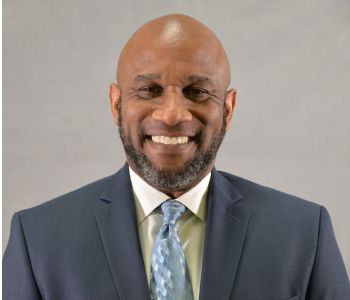
Dr. Nelbert St. Clair
Education
Doctor of Science in Information Systems & Communications (D.Sc.)
Teaching and Research Interests / Recent Publications or Scholarly Output
Dr. St. Clair’s teaching interests focus on cybersecurity, digital literacy, and information technology, with an emphasis on practical applications and workforce readiness. He is passionate about integrating hands-on learning experiences, such as competitions and real-world projects, to prepare students for careers in the evolving tech landscape. His research interests include cybersecurity education, diversity and inclusion in technology fields, and strategies for enhancing digital resilience in underserved communities. Recent scholarly activities including serving as a workshop speaker at the 2nd Annual Digital Literacy Block Party (Charlotte, NC, Sept. 2025), and contributing to student success in the National Cyber League Spring 2025 competition, where all six CCGA teams ranked in the top 10% nationally. Additionally, Dr. St. Clair has supported research on representation of Black cybersecurity professionals, aligning with his long-standing commitment to equity in tech.
J. Alexander Atwood

Education
LL.M. (General Studies-Constitutional, Criminal, and International Law), Georgia State University School of Law (Summa Cum Laude)
J.D. Law, John Marshall School of Law (Cum Laude)
M.A. International Relations (focusing on Low Intensity Conflict and Terrorism), Webster University
B.S. Criminal Justice, Georgia State University
Teaching and Research Interests / Recent Publications or Scholarly Output
My teaching portfolio encompasses a full range of undergraduate courses in criminal justice and public administration, delivered through diverse modalities including in-person, hybrid, and distance learning formats. Courses taught include Introduction to Criminal Law, Constitutional Law for Criminal Justice, Courts and Criminal Procedure, and specialized topics such as Organized Crime, and Ethics in Criminal Justice. These offerings reflect a commitment to bridging theoretical foundations with practical applications drawn from extensive experience in law enforcement, legal practice, and public service. My research interests center on Constitutional Law, Criminal Law, International Law, and Criminal Procedure, with particular emphasis on the intersection of legal doctrine, enforcement policy, and governance. Scholarly activities include presentations and publications addressing judicial interpretation, free speech, civil discourse, and counterterrorism policy. Selected works and/or presentations include Judicial Interpretation as Viewed Through District of Columbia v. Heller, The Erosion of Free Speech in Western Europe, Canada, and the United States, and From Law Enforcement to Armed Conflict: The Legal Transformation of U.S. Counter-narcotics Policy. These contributions underscore an ongoing commitment to advancing discourse on constitutional governance, ethics, and the evolving challenges of law enforcement in a global context.