“Translating Undergraduate Experiences into Graduate Excellence”
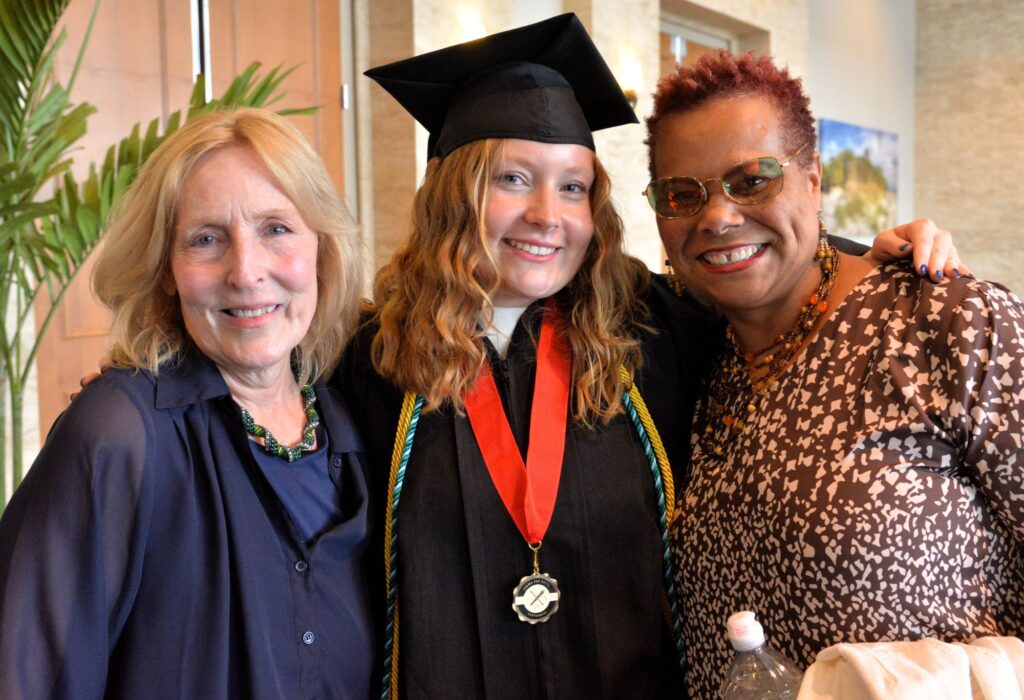
College of Coastal Georgia graduate Lauren Cooper ’24 is pursuing a master’s degree in soil science at Auburn University in the College of Agriculture. She graduated from Coastal Georgia with a bachelor’s degree in environmental sciences, with a concentration in natural resources and a minor in writing. Her time at Coastal not only prepared her for the rigor of graduate-level coursework and research, but her experiences outside of the classroom also gave her the tools for success and leadership.
Cooper is originally from Austin, Texas, and moved to Asheville, North Carolina, around the age of 10. While in high school, she came down to Saint Simons Island for a vacation and loved the area. She heard about the College, and eventually met Dr. James Deemy, associate professor environmental science, who promoted the environmental science program. After enrolling at Coastal, she began her career as a young scientist right away by taking courses in hydrology and coastal research methods in her first year, which she said set her up.
“We did so much work outside in the field, learned how to manage the stresses of being out in the elements and working in teams, and using instruments we’ve never used. We learned the genuine scientific method by being out in the world, observing and making hypotheses, and then doing experiments. We had the exposure of being out in the field and using instruments in real time, and not only in the classroom setting,” Cooper said. “That definitely set me up for what I do now. Almost everything that I’ve done in the field with Dr. Deemy and Dr. (Robin) McLachlan (assistant professor of geology), I’ve implemented in my research now, including being prepared to work with people when it feels like 105 degrees outside. In the lab, so many instruments and methodology that I learned in the labs at Coastal, I use now.”
Her graduate school research is focused on wetland biogeochemistry. She works in the Soil Physics Lab and feels comfortable understanding protocol, lab safety, correct instrument use, and teaching others. This is due to her hands-on learning and lab experiences from Coastal.
Cooper started graduate school in January 2025. Her project focuses on the reduction and oxidation of iron and manganese in wetland soils and working with problematic smectitic soils and vertisols.
“What often happens is that wetlands get misidentified. To bridge that gap, my thesis is to take PVC films (polyvinyl chloride), physically painting them with manganese oxides and iron oxides and then deploying them into the soil. All our sites are in Montgomery, Alabama. Then over the growing season, about a 28-day period, we will see if that iron and manganese is chemically reduced off the film by microbial activity. Then we take those films out of the soil, and if there has been 30 percent or more loss of those oxides, we can tell that it is a wetland anaerobic, hydric soil condition. This project will contribute to identifying innovative practices to wetland identification, conservation, and accurate restoration under the USDA Natural Resources Conservation Service Wetland Reserve Easement Program,” Cooper said.
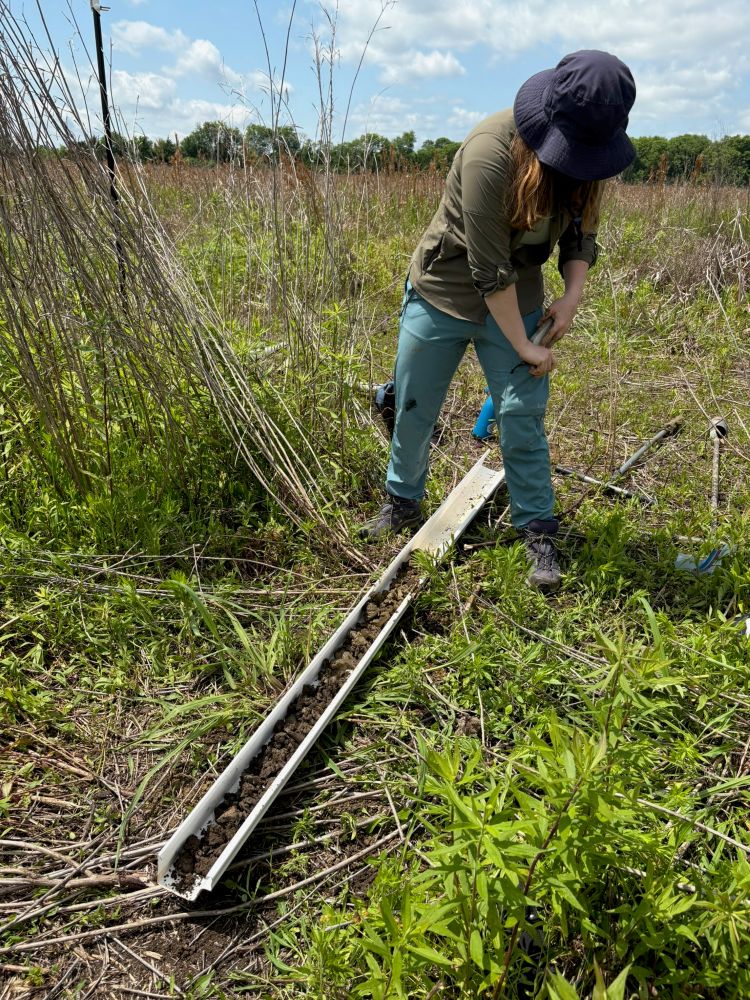
The overall objective of the project is to identify wetlands for innovative wetland conservation or protection, and to chemically identify wetlands through the soil so they are not misidentified and built on.
“If you build on a wetland, you’ll run into problems, but it’s also one of the most biodiverse ecosystems in the world,” she said. “Even our Georgia salt marshes are teeming with life and a lot of threatened species, so wetlands are important.”
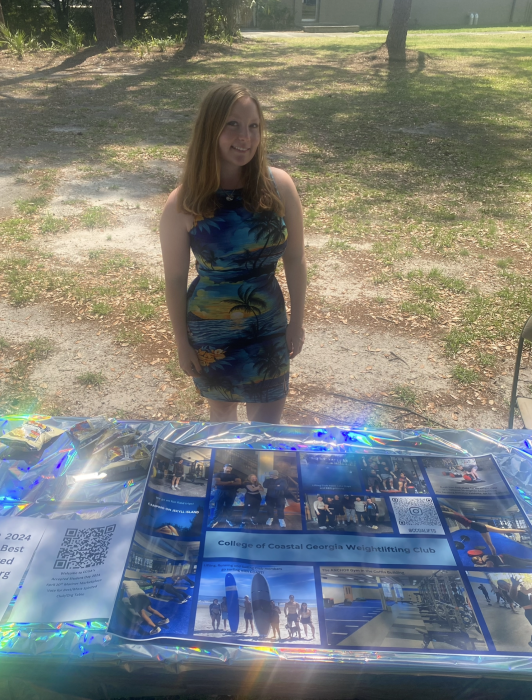
For the project, Cooper precisely cut 300 pieces of PVC film within one millimeter for data analysis and imaging. She mixed the paint—one with iron, and the other with manganese—and let them oxidize. She then painted all the film, half with iron and the other half with manganese. Her research group went to the field sites and installed ground water wells and metal neutron probe access tubes. The neutron probes take weekly readings of the soil moisture content. They also installed weather stations to monitor precipitation, wind, humidity, and other factors. Next, they dug a lot of holes, which was physically taxing. However, Cooper had the muscle strength to accomplish this due to her starting the Weightlifting Club at the College. The club has grown since she served as founder and president and has earned recognition awards. She still weightlifts, which continues to come in handy—particularly in preparing soil samples.
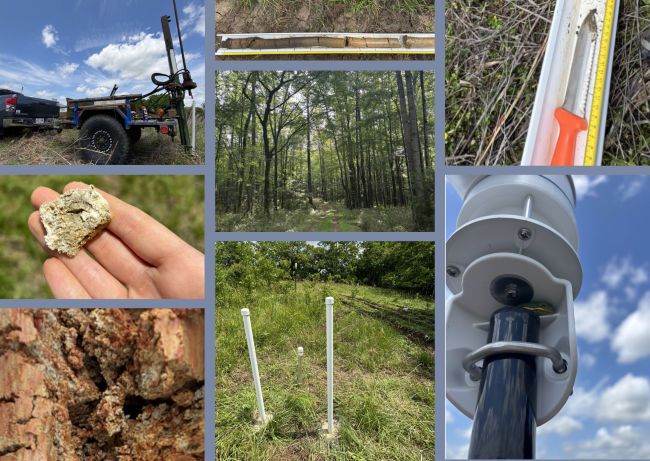
“We dug a lot of holes, very big holes, and we had gallons of soil. I probably collected over 100 bags of soil—which is a great workout. Shoutout to Weightlifting Club because I feel so strong out there,” Cooper said. “We use a pickax to break ground, then an auger and shovel to collect the soil samples, and we take the bags back and put them in cold storage. Now, we are taking a mortar and pestle, the bags of soil, and are hand grinding every single granule of soil to fit through a two-millimeter sieve. I did the math, and I think it’s over 80,000 grams of soil. So, I feel very strong.”
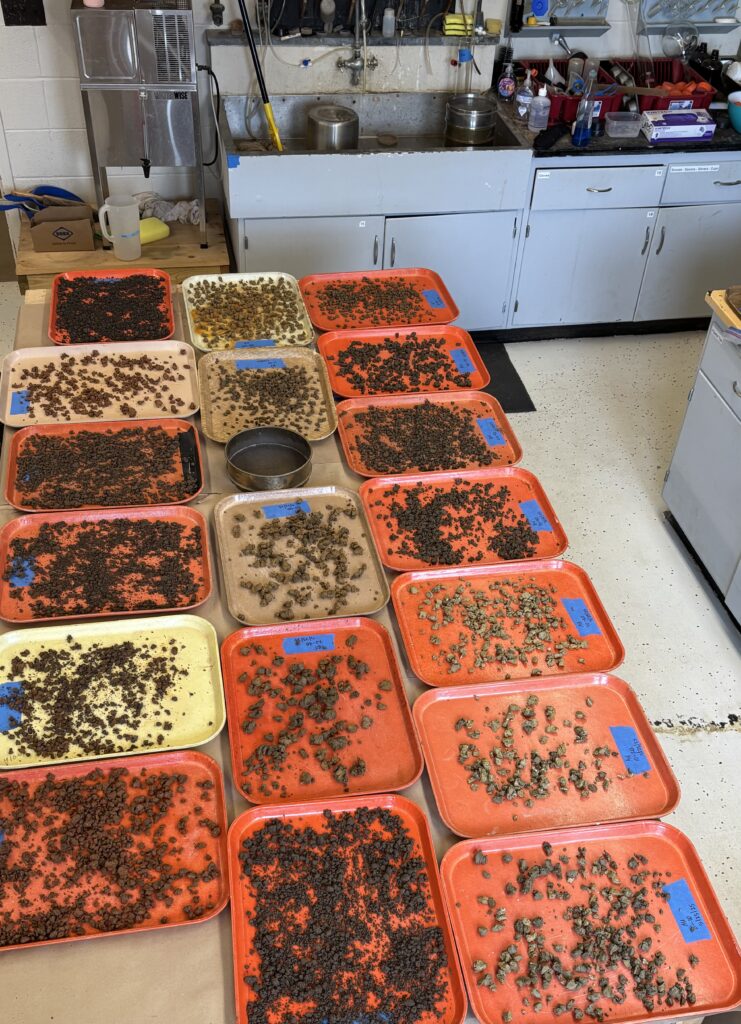
Her next steps will be chemical analysis and mineralogical testing of the soil samples.
Continuing to Be a Leader
Cooper has taken on a leadership role while in graduate school. Starting this semester, she will serve as the president of the Crop and Soil Science Graduate Association. She was encouraged by past professors, friends, and staff members like Steven Pancoast, coordinator of recreation and wellness, Dr. Tonya Coleman, director of student engagement, and Brian Weese, formerly the director of COMPASS Career and Academic Advising and now the CEO/Workforce Strategy Leader of the Golden Isles College and Career Academy, to continue in leadership roles after graduation.
“Being the president of the Sailing Club and creating the Weightlifting Club served me, because at Coastal, people were from a lot of different life backgrounds. We all connected over a love of a sport, or being healthy, or just going out and having a good time. The people here in my community, of the Association, are from over 20 different countries, just in our program. Yes, science is very important, but we’re all hidden away in these labs. It’s important for us to come together and connect with one another,” she said.
Cooper was nominated for the presidential position and had to run in an election, give a speech, and answer questions. She won and is confident in her cabinet team. One of her goals as president of the Association is to close the gap between students who regularly attend events hosted by the program, and those who don’t. She makes it a point to know everyone in her program.
“I’ve gotten to know people really well and formed a really beautiful community. It’s great because so many times it’s like, ‘Hey, do you have some N95s because this soil sample is really stinky.’ That’s been really helpful,” Cooper said laughing. “I work with a lot of diverse graduate students, and we have each other’s numbers. Just the other day, I got a phone call while in the lab from someone saying, ‘Hey, I’m struggling with moving. Can you help me next week?’ It’s an awesome community and the people here are just so sweet.”
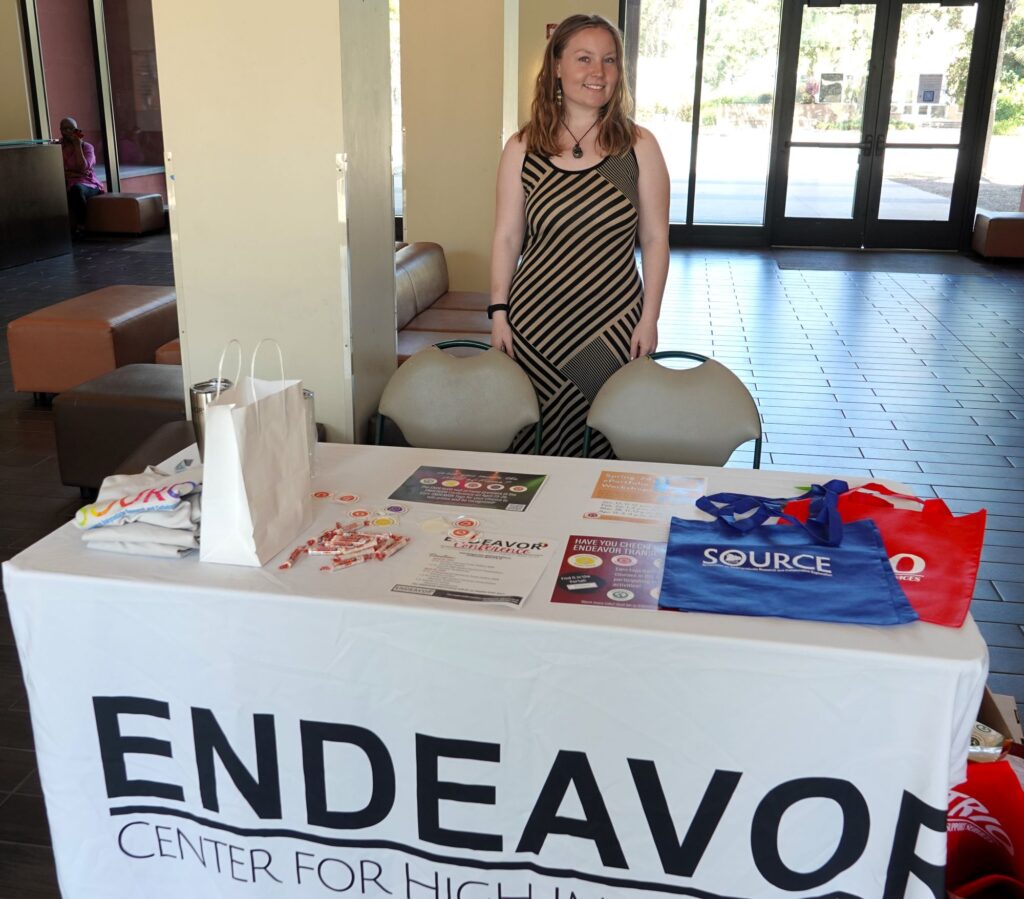
While at Coastal, Cooper was also a member of the Geology Club, participated in the Running Club, and was inducted into the Sigma Tau Delta English Honor Society. She also worked as a student assistant for ENDEAVOR, was as a tutor, and a supplemental instructor.
Coastal’s Best Kept Secret
Cooper considers the professors at Coastal Georgia to be the College’s best kept secret.
“The professors that I’ve met have come from all over the world and are so qualified and have been some of the best mentors I’ve ever had in my life,” she said. “They genuinely care about the students. They’re always at office hours and give one-on-one support. They’re just really amazing.”
Cooper keeps in contact with her professors. She was invited to tag-along on a trip to Providence Canyon by McLachlan, and Deemy calls to check up on her, she said. Cooper described her Coastal Georgia professors as very open to students and open to learning. They are always informing students about resources, internships, and career opportunities.
“The way that I found this master’s program was through Deemy’s encouragement to always check job boards. They are very active in providing opportunities for students,” she said. “Office hours were always open, or you could email them and ask to meet outside of office hours. I really enjoyed, and sometimes miss, the open classroom conversations. Professors held a space for open discussion and for working through things in class instead of just taking notes and then saying goodbye. It allowed for more higher-level thinking.”
She commended her professors for coming up with creative, challenging projects that continue to benefit her in graduate school. Service-learning is an integral part of the environmental science program, and she is grateful for all the skills she gained through it. Cooper misses the community of the program, and talked about how brilliant her peers were. She hopes to build the same camaraderie amongst her graduate school peers as she leads the Association. Cooper encourages students to meet all their professors, even if they don’t have a question.
“Go to office hours and introduce yourself. Coastal is a small school. It’s important to know who you’re learning from,” she said. “Environmental science at Coastal is still growing, and you’ll be working with the same professors for the next four years, even if you’re not in their class. If it’s a smaller class, learn everyone’s name. That will serve you a lot. Know their name and acknowledge them when you see them in the quad, in the cafeteria. You never know how you’ll impact someone’s day by just saying hi.”
She also advises students to take advantage of opportunities to present at conferences and to be creative in how the data is presented to attract attendees. Cooper herself will be presenting at a conference in Salt Lake City, Utah, in November.
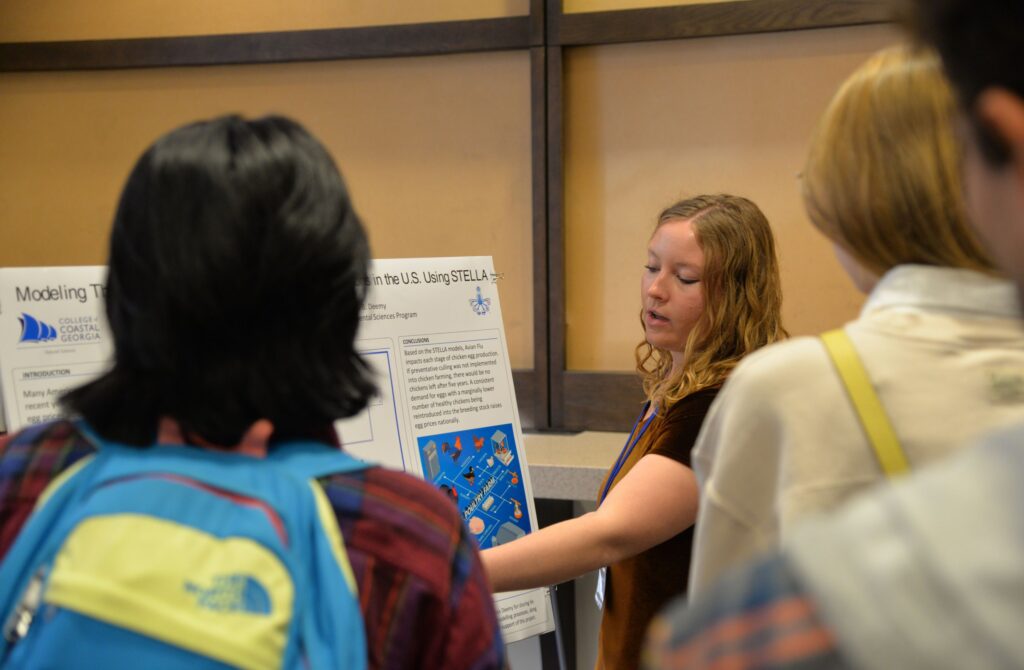
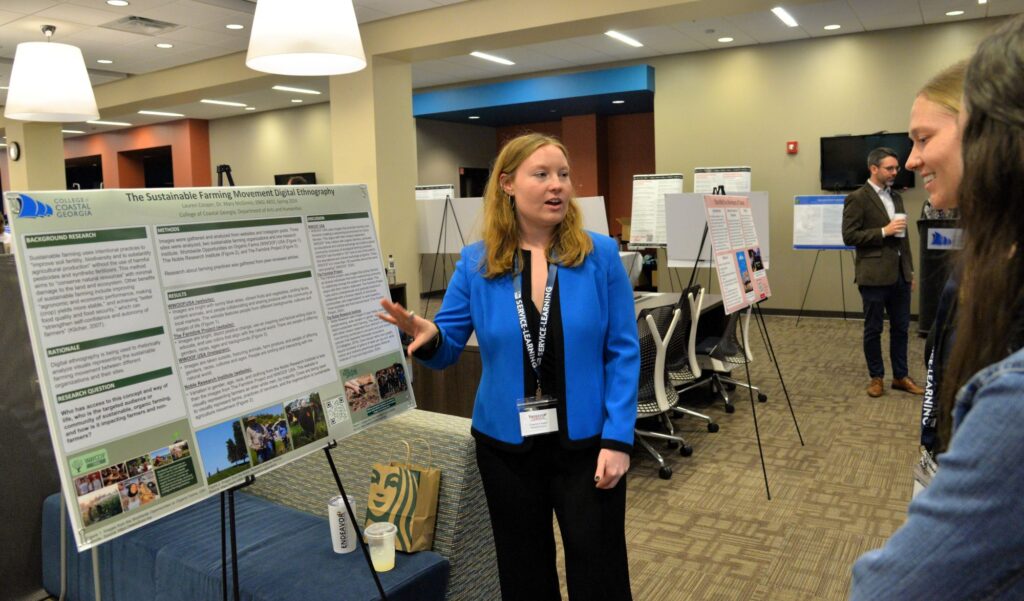
“Hopefully, by then, I would have deployed some of the films and gotten some results. But if not, we will just present our process,” Cooper said.
Coastal Memories and the Future
Cooper misses Saint Simons and Jekyll Island—especially being able to go to the beach so often. She also misses how diverse ecosystems are so close to the College—salt marshes, wetlands, and the beach—and being able to explore them all.
Some of her favorite Coastal moments involved going to award ceremonies and watching as people from all different majors and backgrounds were honored for their achievements.
“There’s so many emotions and joy during these ceremonies, and some of the speeches of what people had to overcome to be successful in college was so special,” she said.

Cooper fondly remembers Lake Days where she kayaked and paddle boarded on Lake Teel and annual college events, like Mariner Fest and Accepted Student Day.
At this point in her career, Cooper is open to possibilities, which include a career in science, teaching, or scientific writing. Writing her thesis has reinforced her love for scientific communication and education.
“I’ve trusted the process this far, and will continue to do that,” she said. “Every single thing I learned in College, even the hard things, had a higher purpose.”
Cooper is using all her acquired knowledge, skills, and experiences from Coastal Georgia to her advantage. From leading student organizations and getting hands-on training in the field, to becoming physically stronger through weightlifting, it’s all working together as a pathway for her success.