Biological Sciences

Are you interested in the study of life, ranging from molecules to ecosystems, with applications in conservation, medicine, and more?

The Bachelor of Science degree in Biological Sciences is designed to help students develop the content knowledge, conceptual understanding, and scientific skills needed to explore the living world across all levels of biological organization. The curriculum provides a strong foundation in biology, and allows students to select one of four concentrations to guide their upper-division coursework: Biochemistry, Biomedical Sciences, Coastal Ecology, or Integrative Biology.
Biological Sciences majors practice scientific reasoning and investigative methods in the classroom, laboratory, and field, including the natural environment of the Georgia coast. They also have many opportunities for experiential learning in the form of internships and service-learning projects with community partners and undergraduate research with faculty mentors. Through these experiences, students are able to apply and extend their knowledge and skills beyond the classroom to the research lab, the estuary, the clinic, or the K-12 classroom. Students may present their work at the annual Coastal Science Symposium, the Service-Learning Symposium, the Symposium on Undergraduate Research and Creative Expression, and regional/national conferences. Students are also encouraged to participate in co-curricular activities such as Biology Club and STEM outreach.

Biological Sciences alumni have succeeded in professional and graduate programs including, but not limited to, medical school, veterinary school, pharmacy school, public health, integrative life sciences, marine sciences, entomology, and astrobiology. They have also been employed by a variety of private sector firms, state and federal agencies, and local school systems.

SEA-PHAGES

The Science Education Alliance – Phage Hunters Advancing Genomics and Evolutionary Science – is a two-semester, discovery-based, undergraduate research program. Students can participate in one or both courses.
SeaPhages

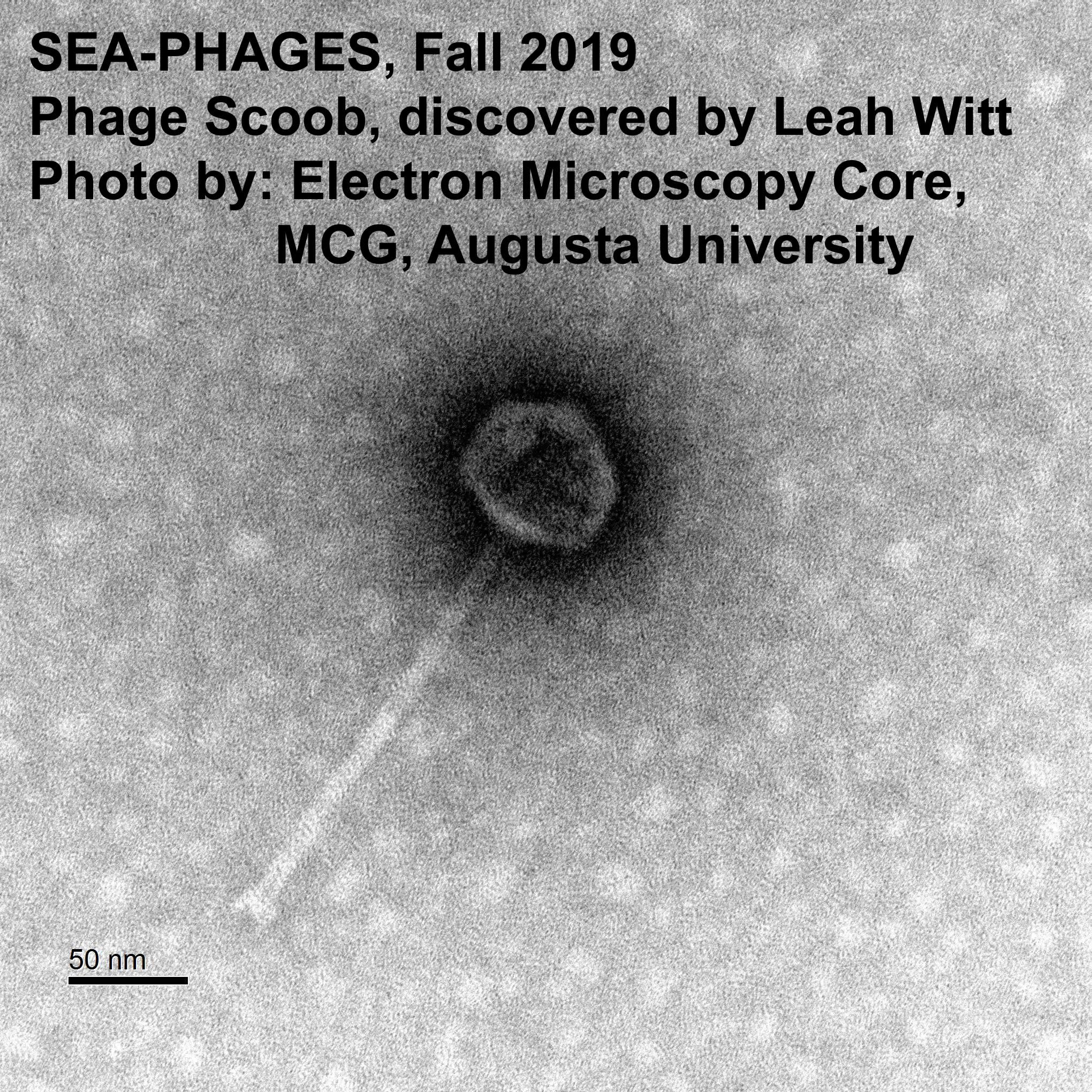
The program is administered by the University of Pittsburgh in conjunction with the Howard Hughes Medical Institute. Bacteriophages (“phages”) are viruses that infect and replicate within bacteria and archaea, ultimately killing their host bacteria. They are target-specific and can attack host bacteria without harming the human body. The use of phages can be an effective tool to combat bacteria that are resistant to antibiotics. Bacteriophage exists abundantly in the soil, which is where students start in the first part of the course.
LEARN MORE

Dr. Christine Brown

Program Coordinator, Health Sciences
Assistant Professor of Health Science and
Anatomy & Physiology

Education
DPT, Doctor of Physical Therapy, Shenandoah University

Teaching and Research Interests / Recent Publications or Scholarly Output
My teaching interests center on preparing undergraduate students with the hands-on, applied skills necessary for success in healthcare and health-related professions. I primarily teach Anatomy & Physiology at the lower-division level and upper-division courses within the Health Sciences program, including Functional Anatomy and Exercise Testing & Prescription. My teaching emphasizes active, experiential, and clinically applied learning through laboratory-based skill development and service-learning partnerships that allow students to design and implement health promotion programming for the college and surrounding community. My scholarly interests focus on student-led research and applied scholarship, with an emphasis on mentoring students through the development, completion, and presentation of poster projects on self-selected topics. This work highlights undergraduate research, critical thinking, and professional development while reinforcing evidence-based practice in health and exercise science.

James Carpenter

Assistant Professor of Biology

Education
M.S. Zoology, University of Maryland
B.S. Biology, Oberlin College
M.L.T., College of Coastal Georgia

Teaching and Research Interests / Recent Publications or Scholarly Output
Neurocytoarchitectonics, neuronal morphology and developmental neuroanatomy across metamorphic transition, using the dragonfly optic lobe visual system as an ontogenetic-phylogenetic model.

Joshua Clark

Senior Lecturer of Biology
Camden Faculty/Staff

Education
M.S. in Biology, Georgia College and State University
B.S. in Biology with Minor in Geology, Georgia College and State University

Teaching and Research Interests / Recent Publications or Scholarly Output
As a biology professor, Clark’s main experience is in the education of students in areas of science concentration, though he has also developed and taught courses for students in areas of non-science concentration. He is familiar with teaching in a traditional classroom, in the field, and in a laboratory setting. Clark has served his institution by sitting on several college and departmental committees, and also by developing curriculum for new biology courses. While teaching, he has also been engaged in advising undergraduate research, primarily related to that of a paleontological nature.

Angalet, Benjamin, and Josh Clark. 2022. “Analyzing the Shark Paleoecology of Coastal Georgia From the Miocene and Pliocene Epochs.” Georgia Journal of Science 81 (2): 1-11.

Beck, Lucy A., A.J. Mead, and Clark, J. “Late Pleistocene Turtles from Coastal Georgia.” Georgia Journal of Science 81 (1): 79.

Parmley, D., Clark, J., and A. J. Mead. 2020. “Amphibians and Squamates from the Late Pleistocene (Rancholabrean) Clark Quarry, Coastal Georgia.” Eastern Paleontologist 7:1-23.

Wall, W. P., A. J. Mead, V. L. Santucci, J. P. Kenworthy, K. A. Clark, and J. L. Clark. 2008. “Paleontological Resource Inventory and Monitoring-Northern Great Plains Network.” Natural Resource Technical Report NPS/NRPC/NRTR. National Park Service, Fort Collins, Colorado.

Parmley, D., Clark, J., and A. J. Mead. 2007. “Amphiuma (Caudata: Amphiumidae) from Pleistocene Clark Quarry Local Fauna of Coastal Georgia.” Georgia Journal of Science 65 (2): 76-81.

Agisotelis, Cierra, J. Clark, K. Clark, and R. McLachlan. 2025 “Microfossil Analysis of Clark Quarry, GA: Drum Fish Teeth and Vascular Plants as Indicators of a Late Pleistocene Environment.” Endeavor Conference. College of Coastal Georgia. Poster.

Fambrough, Olivia, J. Clark, K. Clark, and R. McLachlan. 2025 “Fossilized Gar Scales of Clark Quarry.” Endeavor Conference. College of Coastal Georgia. Poster.

Ostertag, Cal, J. Clark, K. Clark, and R. McLachlan. 2025 “Ancient Amphibians of Clark Quarry: Fossils and Determining Paleoclimate.” Endeavor Conference. College of Coastal Georgia. Poster.

Robison, Emma, R. McLachlan, J. Clark, and K. Clark. 2025 “Fossilized Micro-Vertebrae Specimens and Considerations for the Reconstruction of Clark Quarry in the Pleistocene Epoch.” Endeavor Conference. College of Coastal Georgia. Poster.

Starbuck, Paige, J. Clark, R. McLachlan, and K. Clark. 2025 “Small Mammals Fossils of the Clark Quarry.” Endeavor Conference. College of Coastal Georgia. Poster.

Kelly Clark

Lecturer of Biology and Geology

Education
M.S. in Biology, Georgia College and State University
B.S. in Biology with Minor in Geology, Georgia College and State University

Teaching and Research Interests / Recent Publications or Scholarly Output
Clark teaches introductory biology and geology laboratories, both in in-person and online formats. He co-advises research in the College of Coastal Georgia Fossil Research Lab. His primary area of research is Ice Age microfossils from a site here in Glynn County.

2024. Coastal Science Symposium. “Fossilized jaws of Clark Quarry, Georgia” by Emma Robinson, Robin McLachlan, Joshua Clark, & Kelly Clark. College of Coastal Georgia, Brunswick, GA.

2024. Coastal Science Symposium. “Reconstructing past environments with fossilized teeth at Clark Quarry, GA” by Guy Haller, Robin McLachlan, Kelly Clark, and Joshua Clark. College of Coastal Georgia, Brunswick, GA.

2024. Coastal Science Symposium. “Clark Quarry microfossil bio-illustrations” by Paige Starbuck, Joshua Clark, Robin McLachlan, and Kelly Clark. College of Coastal Georgia, Brunswick, GA.

2024. Endeavor Conference. “Clark Quarry microfossil bio-illustrations” by Paige Starbuck, Joshua Clark, Robin McLachlan, and Kelly Clark. College of Coastal Georgia, Brunswick, GA.

Julie Fusco

Julie Fusco

Lecturer of Anatomy and Physiology

Education
MS in Human Anatomy & Physiology Instruction, Northeast College of Health Sciences
BS in Human Physiology, Boston University

Teaching and Research Interests / Recent Publications or Scholarly Output
I am interested in all things related to Human Physiology, but I have a specific fondness for muscles and bones. My hope every semester is get at least one convert that finds the same fascination with how the body works that I have.

Dr. Jennifer Hatchel

Jennifer Hatchel

Professor of Biology
Camden Faculty/Staff

Education
Ph.D. in Microbiology, Miami University
M.S. in Biological Sciences, Austin Peay State University
B.S. in Biological Sciences, University of Tennessee at Martin

Teaching and Research Interests / Recent Publications or Scholarly Output
My teaching interests include general biology, foundations of microbiology, advanced microbiology, microbial diversity, infectious diseases, and environmental microbiology. My research interests are in the areas of antimicrobial susceptibility and environmental bacteriology. My most recent publication is a lab manual titled Techniques and Applications for the Microbiology Lab published by Kendall Hunt (2024).

Deanna Helphrey

Lecturer of Biology

Education
M.S. in Microbiology and Cell Science with emphasis in Biochemistry, University of Florida
B.S. in Pre-Professional Biology, College of Coastal Georgia

Teaching and Research Interests / Recent Publications or Scholarly Output
Principles of Biology, Foundations of Microbiology, the Human Microbiome, Biochemistry, and Application of Biochemical Principles in relation to the human microbiome.

Dr. Holly Nance

Holly Nance

Associate Professor of Biology

Education
Ph.D. in Biological Sciences, Clemson University
M.S. in Geological Sciences, University of Texas at Austin
B.S. in Biology, University of Texas at Austin

Teaching and Research Interests / Recent Publications or Scholarly Output
Dr. Nance is interested in genetics and genomics, and engaging students in course-based undergraduate research experiences.

Dr. Traesha Robertson

Associate Professor of Biology

Education
Ph.D. in Biology (Plant Physiology), Texas Tech University
M.S. in Biology (Plant Ecology), Sul Ross State University
B.S. in Biology, Angelo State University

Teaching and Research Interests / Recent Publications or Scholarly Output
Dr. Robertson is a botanist who conducts research in plant ecology, with primary interests in plant phenology, ecology, and physiology and their responses to climate change. She teaches both lower- and upper-division courses in biology with a focus on the botanical courses. She also mentors Coastal Ecology students, serves as the curator of the College of Coastal Georgia’s herbarium and greenhouse, and is an advising scientist for TIDES (Texas Integrated Diving & Ecological Studies) Laboratory, which is a multi-institutional undergraduate research program that focuses on student-driven marine research projects on the Mesoamerican Barrier Reef System in the Caribbean.

Dr. David Stasek

David Stasek

Professor of Biology

Education
Ph.D. in Zoology (2009), Miami University (Oxford, OH)
M.S. in Zoology (2006), Miami University (Oxford, OH)
B.S. in Biology (2002), Baldwin-Wallace College (Berea, OH)

Teaching and Research Interests / Recent Publications or Scholarly Output
Natural History of Vertebrate and Invertebrate Animals, Predator-prey interactions, and Biodiversity

Kennedy, T.*, Outhwaite, A., Rigdon, J.*, and Stasek, D. The biodiversity of the invertebrate community within an intertidal pond on Jekyll Island. Poster presentation at the Coastal Science Symposium at the College of Coastal Georgia, December 5, 2025. This research will be submitted for publication Spring 2026. *denotes undergraduate coauthor

Dr. Dantera Tangpisuthipongsa

Dantera Tangpisuthipongsa

Associate Professor of Biology

Education
M.D. in Medicine, Augusta University-Medical College of Georgia
B.S. in Neuroscience, Emory University

Teaching and Research Interests / Recent Publications or Scholarly Output
Teaching Interests: Human Anatomy & Physiology I and II, Pathophysiology, and Immunology; mentoring students pursuing careers in healthcare: medicine, veterinary, pharmacy, dental, PA, optometry, etc.

Research Interests: Developing and evaluating innovative instructional approaches to improve student success in A&P courses.

Dr. Holly Nance

Holly Nance

Associate Professor of Biology

Education
Ph.D. in Biological Sciences, Clemson University
M.S. in Geological Sciences, University of Texas at Austin
B.S. in Biology, University of Texas at Austin

Teaching and Research Interests / Recent Publications or Scholarly Output
Dr. Nance is interested in genetics and genomics, and engaging students in course-based undergraduate research experiences.

Concentrations in Biological Science

Biochemistry

The Biochemistry concentration emphasizes quantitative approaches that bridge students’ interests in biology and chemistry. Students are prepared for a variety of biochemistry-related graduate programs and jobs. In particular, they gain laboratory skills that are marketable for industry positions such as quality control, product development, and diagnostics.

LEARN MORE

Biomedical Science

The Biomedical Science concentration prepares students for professional programs and rewarding careers in human health, veterinary medicine, and other medical-related fields. Additionally, students are well-qualified for graduate studies in biomedical research, public health, and biotechnology.

LEARN MORE

Coastal Ecology

The Coastal Ecology concentration explores biological diversity on the coast and beyond, including how organisms interact with their environment and how threatened species can be protected. Students are prepared for employment with a variety of wildlife and natural resource management agencies, conservation nonprofits, and research organizations, or they may pursue graduate studies in areas such as marine biology, ecology, zoology, botany, or conservation science.

LEARN MORE

Integrative Biology

Integrative Biology incorporates multiple disciplines and perspectives to study whole organisms – plants, animals, microbes, etc. – and the genetic, cellular, physiological, ecological, and evolutionary processes that shape them. The Integrative Biology concentration is the most flexible, preparing students for a wide range of academic and professional pathways depending on their interests and goals.

LEARN MORE

Coastal Alumni Host Conservation Biology Class at UGA Marine Extension

Dr. Tate Holbrook’s Conservation Biology class recently visited the University of Georgia Marine Extension (MAREX) and Georgia Sea Grant’s Brunswick Station for a special hands-on learning experience in conservation.

Read More Here


Coastal Georgia Biology grad wins NASA award

Coastal Georgia graduate Madeline Garner – now a fellow in Montana State University’s Molecular Biosciences Program – has won a prestigious NASA award to advance search for extraterrestrial life. Garner is one of only 33 doctoral students among 249 applicants nationwide to be selected. She is exploring how a tool that has recently revolutionized DNA sequencing could be applied to detecting biomolecules in extreme environments like those found on Jupiter’s moon.

“This is about looking for life not just as we know it here on Earth, but as we don’t know it,” she said. “That’s what’s really exciting.”

READ MORE HERE